
Here's a question a lot of people ask in September and October: "How do I entertain without spending the entire day in the kitchen?"
The answer is simpler than you think. A Thanksgiving charcuterie board does what most holiday appetizers can't. It requires no cooking. No baking. No complicated plating. Just thoughtful assembly and a few smart ingredient choices. You can build one in 15 to 20 minutes, and your guests will think you've been planning it for weeks.
This is the real appeal of a Thanksgiving charcuterie board, especially if you're hosting for the first time, or you're juggling turkey prep alongside appetizers. You get to enjoy time with your guests instead of standing alone in the kitchen making last-minute fixes.

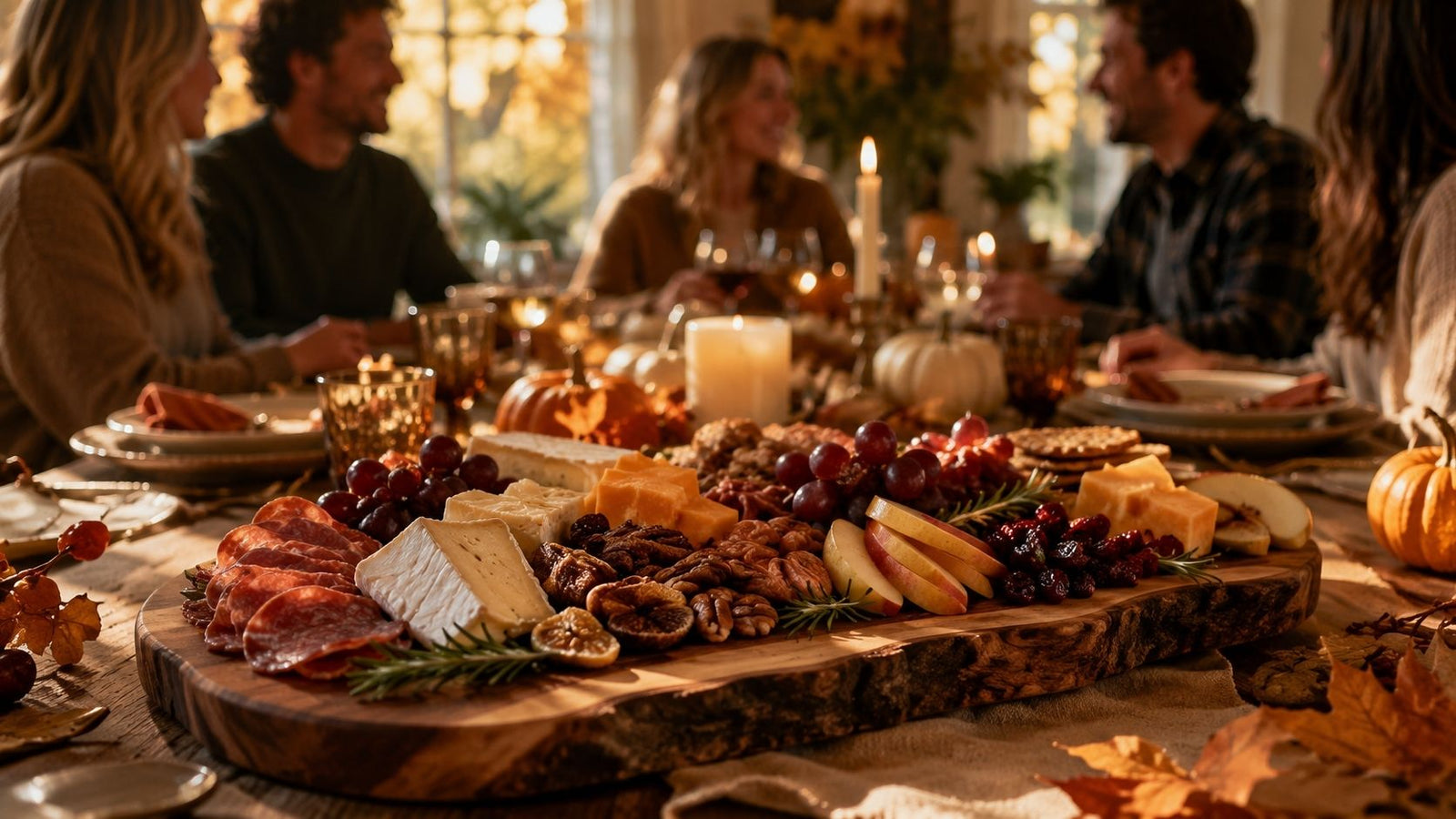
Spring charcuterie boards are all about fresh color and delicate touches. Thanksgiving boards are their autumn cousins. They lean into seasonal flavors and warm tones. Cranberry, nutmeg, dried apricots, spiced nuts, sharp cheddar, and toasted crackers set the mood before anyone sits down to eat.
The other difference is simplicity. When you're managing multiple dishes, you don't need a board that demands precision or rare ingredients. You need something you can pull together with items from your regular grocery store, on a timeline that doesn't add stress.
The best Thanksgiving charcuterie board is the one you'll actually make without second-guessing yourself.
The board itself matters more than you'd think. You want something sturdy enough to hold the weight of cheeses and meats, large enough to feel generous (but not so large it looks sparse), and wooden enough to feel warm and autumn-ready.
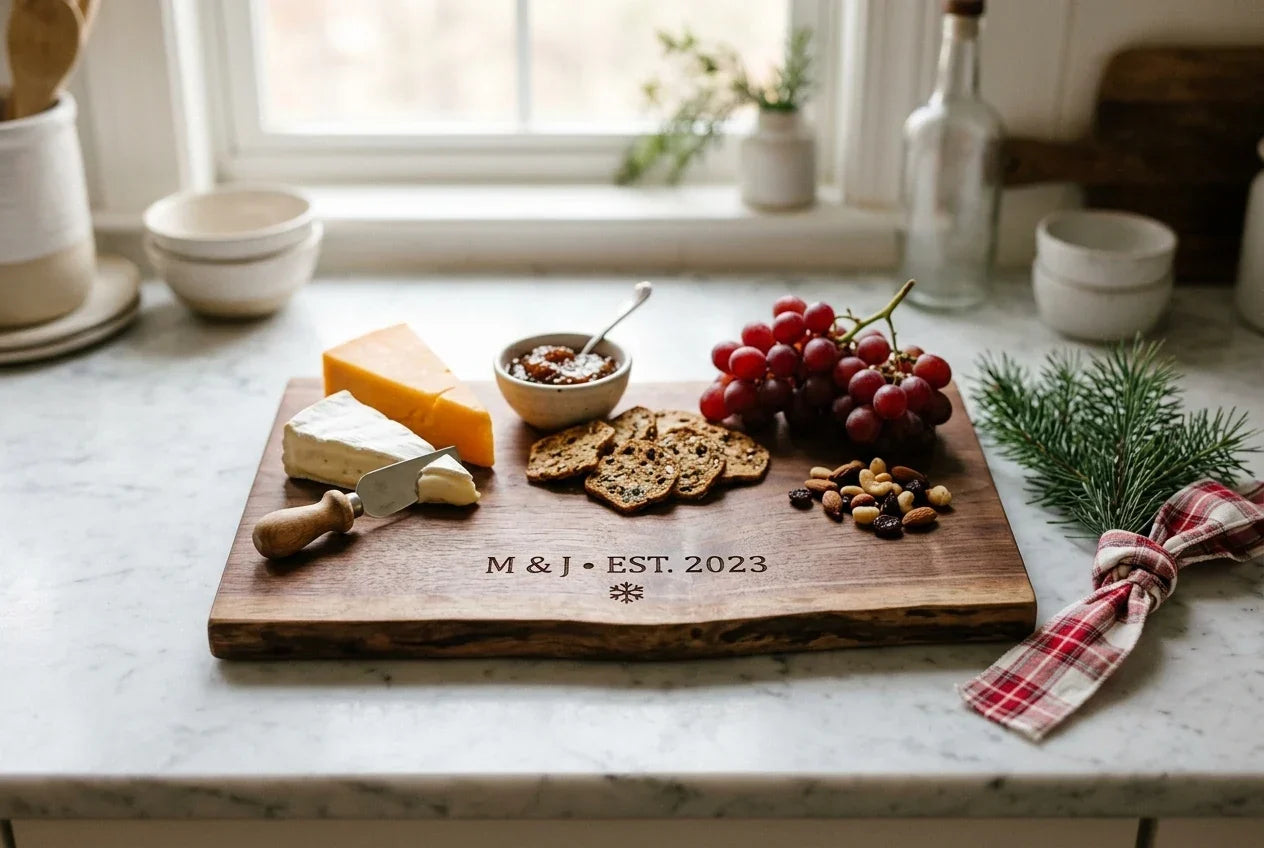
Roots to Table charcuterie boards are built specifically for this kind of entertaining. A 18 by 12-inch board strikes the right balance. It's large enough for a gathering of 10 to 12 people, intimate enough to feel intentional rather than overstuffed, and the handcrafted wood adds a genuine, heirloom quality that elevates the whole presentation. Whether you choose a natural maple finish or a deeper walnut live edge board, the board becomes part of the table's story.
If you're buying a board specifically for entertaining this season, look for one with a juice groove (that carved edge that catches liquid). It's practical and signals that you've thought this through.

You don't need 20 ingredients. You need balance. Think in terms of these five categories:
Cheese: Choose two or three. You want range without overwhelm. A sharp cheddar (accessible, crowd-pleasing), a creamy brie or goat cheese (soft, a little fancy), and maybe a hard cheese like an aged gouda or parmesan (texture and depth). That's it. Buy them in wedges or blocks, not pre-sliced. Slice them just before serving so they taste fresher.
Cured meats: Stick to one or two. Salami is a safe bet. It's recognizable, pairs well with everything, and doesn't intimidate anyone. If you want to add a second option, prosciutto or soppressata work beautifully. Again, buy whole and slice it fresh, or ask the deli counter to slice it thin just before you leave.
Fresh fruit: Grapes, apple slices, and pear. Grapes add color and sweetness. Apples and pears offer tartness. Cut apples and pears just before serving (toss them with a tiny bit of lemon juice to prevent browning).
Dried fruit: Cranberries, dried apricots, and figs. These are your autumn anchors. They add both visual interest and seasonal flavor. They also keep well, so you can prep the board earlier in the day without worry.
Nuts, crackers, olives, and accents. Candied or spiced almonds, pecans, or walnuts feel seasonal. Two or three types of crackers (water biscuits, herb crackers, and maybe something heartier like whole grain). A small bowl of olives. A drizzle of honey. A small pot of fig jam or whole grain mustard. If you want a deeper dive on what to include, our guide to the best food for a charcuterie board breaks down pairings in detail.
That foundation serves 10 to 12 people comfortably and takes about 15 minutes to assemble.

Here's the secret nobody talks about: the best-looking boards look effortless because they follow a pattern.
Start with the anchor elements. Place your cheeses first, leaving some space between them. Don't arrange them in a straight line. Create small clusters or arrange them in a triangle. Cheese wedges should face slightly outward so people can see what they're grabbing.
Layer the meats around the cheese. Create loose piles or roll them slightly. Salami that's folded or rolled takes up less space and looks more intentional than flat slices scattered everywhere.
Fill in with fruit, nuts, and crackers. Think of these as your fillers. They're not decorative afterthoughts. They're the connective tissue that brings color and texture to empty spaces. Grapes can form small clusters. Nuts can be grouped in ones and twos. Crackers can lean against cheese wedges or fill gaps.
Add the small bowls and accents last. A small bowl of olives, a tiny spoon in a pot of jam, a small ramekin of honey. These feel intentional, not improvised.
The whole point is to create visual movement without chaos. You want people to look at your board and think, "This person knows what they're doing," not "This took hours."
If you're hosting Thanksgiving, your timeline is tight. Here's how to manage the charcuterie board without it becoming another stressor. If you want a fuller game plan for the whole evening, our tips on how to host a dinner party cover the rest of the table.
Two days before: Buy your cheeses and cured meats. Store them in the back of the refrigerator where the temperature is most stable. Buy your dried fruit, nuts, and crackers.
One day before: Assemble everything except fresh fruit and fresh herbs. Cover the board loosely with plastic wrap and store it in a cool place (not necessarily the refrigerator, unless your kitchen is very warm). Slice and refrigerate your apples and pears.
One to two hours before guests arrive: Remove the board from storage. Add fresh fruit. Add any fresh herbs (thyme, rosemary sprigs) for color. Step back and look. You're done.
This approach gives you a board that's 80 percent ready the day before, so you can focus on turkey and sides without feeling rushed.
Pre-sliced cheese. It dries out and tastes cardboard-like. Buy blocks and wedges. Take 10 minutes to slice what you need.
Too many ingredients. More is not better. A board with 10 thoughtful items beats a board with 20 confused ones. Your guests aren't memorizing everything. They're enjoying the flavors and the moment.
Forgetting texture. Soft, hard, creamy, crunchy, sweet, salty. If your board has all soft elements or all hard elements, it feels flat. Balance matters.
Neglecting the board itself. A chipped ceramic platter or a plastic cutting board doesn't set the right tone. Thanksgiving deserves something real. Wood, slate, marble, or a beautiful ceramic piece elevates the entire experience.
Making it too early. A board assembled six hours before serving looks tired. Assemble it close to serving time. Your guests will taste the difference.
A Thanksgiving charcuterie board doesn't replace a proper meal. It's an appetizer. It's a way to keep guests happily occupied while you're finishing the turkey. It's a conversation starter before everyone sits down.
Think of it as a bridge between the moment people arrive and when dinner actually hits the table. It sets a tone of abundance and care without demanding that you sacrifice your own time.
For many hosts, especially those new to entertaining, a charcuterie board is permission to relax. You're not standing over a hot stove. You're not watching a soufflé rise. You're simply offering your guests something beautiful and delicious while you handle the serious cooking in the background.
Here's something worth considering: the best charcuterie boards are the ones you'll use year after year.
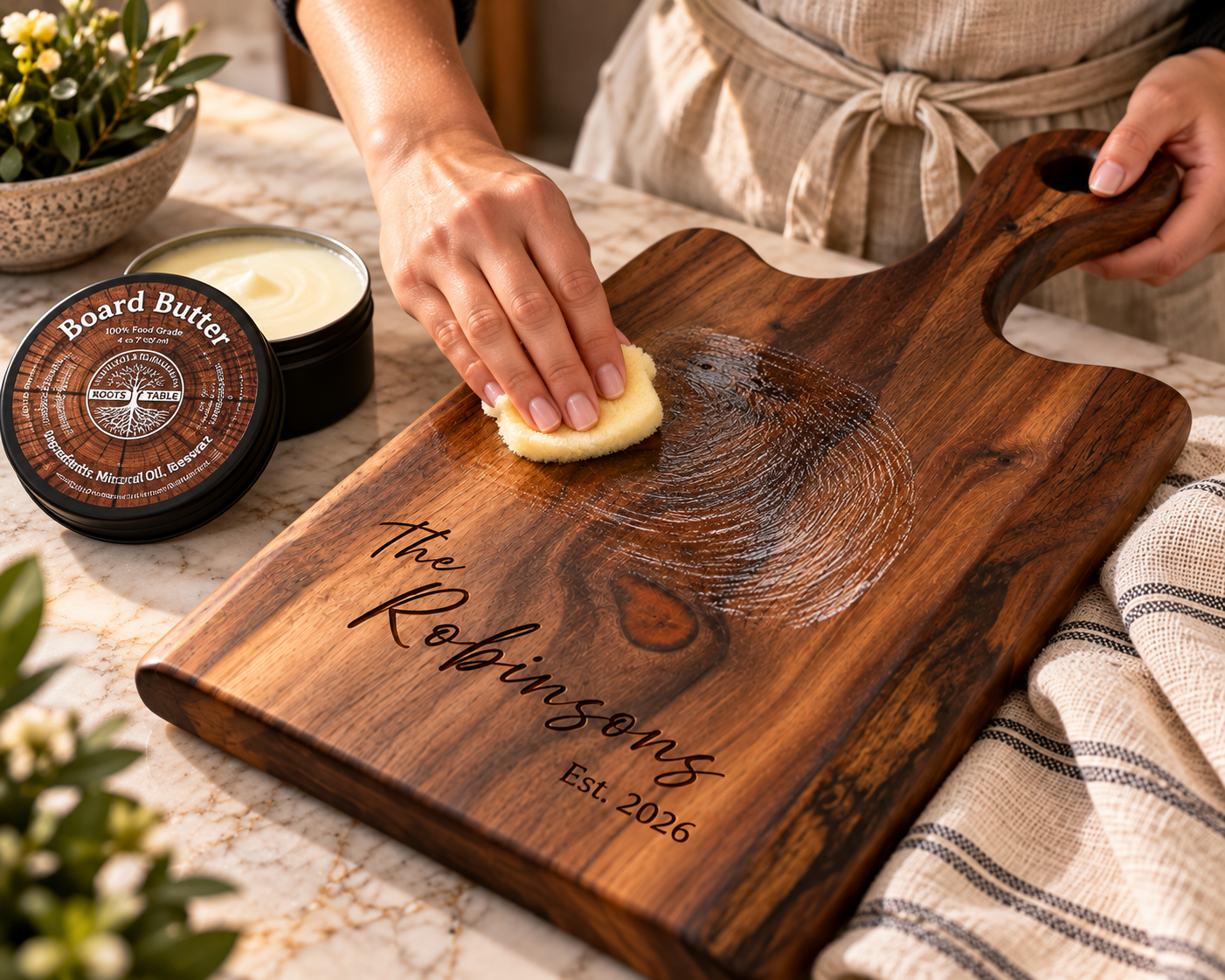
A handcrafted wooden board, properly cared for, becomes a tradition. It shows up on your table for Thanksgiving, then again for New Year's, then for summer entertaining, then for a housewarming gift. It ages beautifully. The wood deepens over time. The surface gets the gentle patina of real use. A little upkeep goes a long way, and our wood board care guide walks you through keeping it looking its best.
When you invest in something real for your home, something made to last, entertaining becomes a little easier each year. You're not starting from scratch. You already have the board. You already know how to arrange it. You're just refining your technique.
The reason a Thanksgiving charcuterie board works is that it's honest. It doesn't pretend to be something it's not. It's not a four-course meal. It's not a dessert. It's an appetizer built on quality ingredients, thoughtful arrangement, and the genuine desire to feed people you care about.
And it can be on your table in less time than it takes to preheat the oven.
That's the real magic of entertaining this way. You get to be present. You get to enjoy your guests. You get to feel like you've pulled off something special, because you have, without sacrificing the rest of your day.
So this Thanksgiving, skip the stress. Build a board. Invite people over. Let the food and the moment do the work.