
When you see a handmade wooden cutting board priced significantly higher than what you'd pay at a big-box retailer, it's natural to wonder where that premium comes from. Why does a custom board cost so much more than a factory alternative? The short answer is this: you're not just paying for a piece of wood. You're paying for material selection, skilled labor, time, durability, and the expertise of a craftsperson who has spent years perfecting their trade. Understanding why handmade wood boards cost more reveals the hidden value in artisan products and how they differ fundamentally from mass-produced alternatives.

The journey of a handmade board begins long before the first cut. Artisan makers don't grab the nearest piece of lumber. They carefully select wood based on grain pattern, color, stability, and suitability for the intended use.
For cutting boards, hardwoods like maple, walnut, cherry, and ambrosia are preferred for their durability, food safety, and beautiful aesthetics. These premium hardwoods cost significantly more than the softwoods, plywood, or particleboard used in mass-produced boards. A single board foot of high-quality walnut can cost $15 to $25, while a large cutting board might require multiple board feet carefully selected for grain matching and appearance. The reasons run deeper than looks alone, as walnut's natural durability and density make it a premium choice that comes at a premium price.
But it's not just about picking quality wood. Artisans account for waste. When crafting a board from rough lumber, about 15 to 25 percent of the material is lost to milling, grain selection, and potential mistakes. This means a maker might need to purchase significantly more wood than the final board requires. This waste factor is built into the cost of handmade products.
Mass manufacturers bypass these selection challenges by using engineered wood products like plywood or MDF, which are cheaper, more uniform, and generate less waste. This efficiency comes at a cost to durability: particleboard and plywood cannot withstand repeated cutting action, absorb moisture, and often fail within a few years. A handmade hardwood board, by contrast, like the custom engraved cutting boards made one at a time in our workshop, will last decades or generations with proper care.

This is where the distinction between a handmade board and a factory product becomes visible. True craftsmanship involves selecting wood pieces whose grain patterns complement each other, creating a cohesive aesthetic that tells a story.
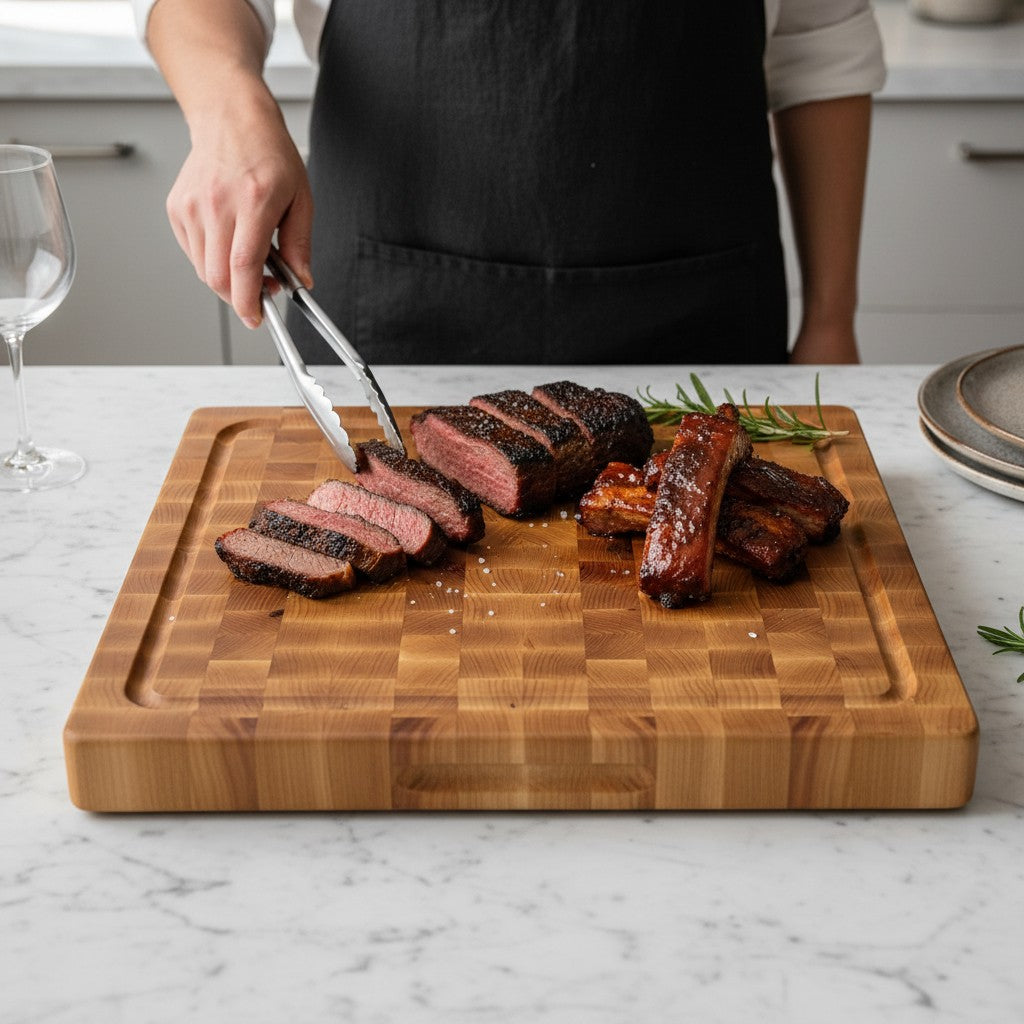
Edge-grain boards require careful arrangement of individual wood strips selected for their grain flow and color variation. End-grain boards, which feature the end of wood fibers exposed, demand even more precision. You can see this firsthand in our end-grain walnut board, where every block is positioned by hand for both beauty and durability. A maker might spend hours sorting through lumber to find pieces that work together visually and structurally. This curation is invisible to the buyer but essential to the final product.
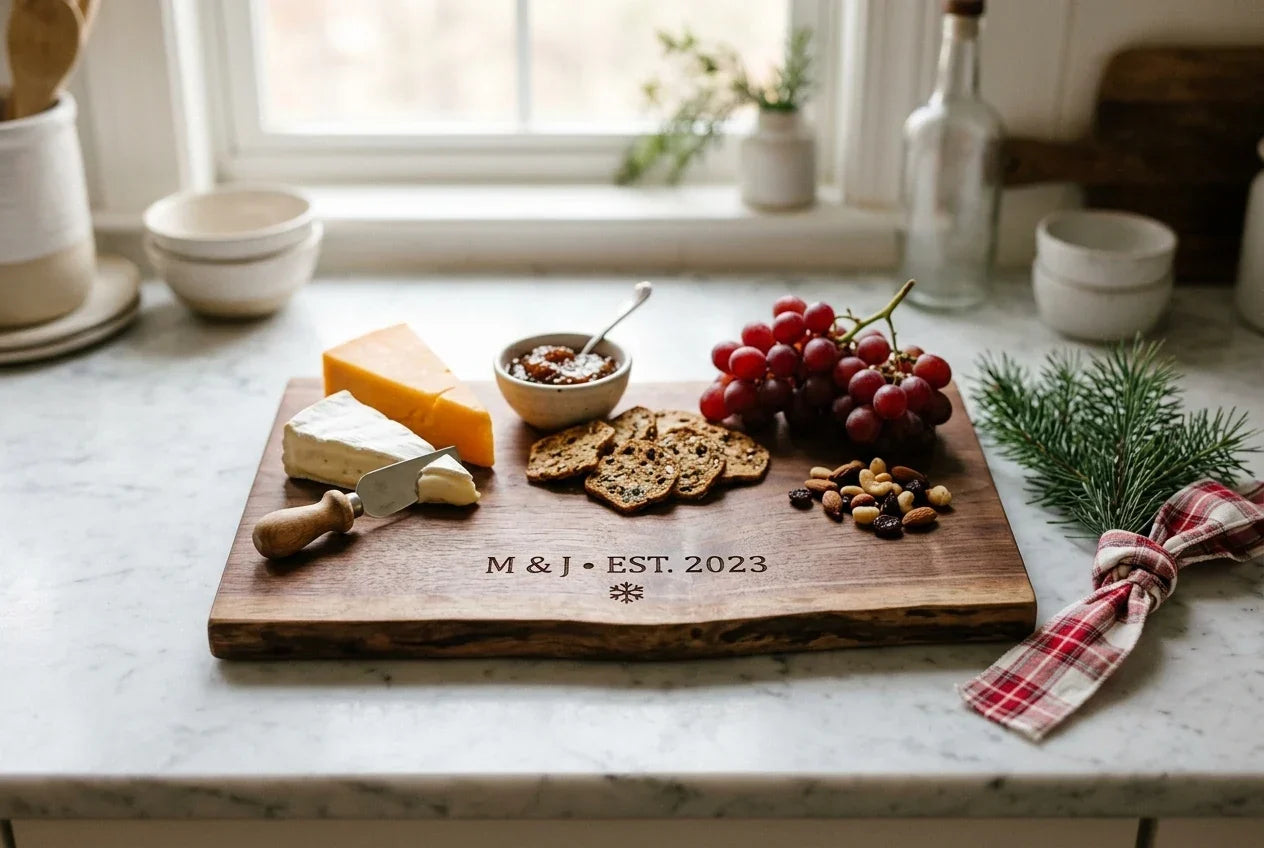
Live-edge boards present additional complexity: they showcase the tree's natural edge, with all its unique characteristics. Our live-edge charcuterie boards are a good example, since no two pieces are ever identical. Selecting a live edge that's stable, beautiful, and free from defects requires experience. A craftsperson must understand wood movement, identify potential stress points, and ensure the final piece won't split or warp.
This selective process can add 5 to 10 hours to a project before the maker even begins cutting or joinery. Mass-produced boards skip this entirely, using whatever lumber moves efficiently through the assembly line.
Perhaps the most significant factor in why handmade wood boards cost more is the sheer amount of time required.
Consider the steps in creating a single hardwood cutting board: milling lumber to precise thickness, joinery (if making multi-piece boards), routing handles or juice grooves, sanding through multiple grits (typically 80, 120, 180, and 220 grits minimum), finishing preparation, applying stain if desired, applying food-safe finish coats with proper drying time between applications, final sanding, quality inspection, and packaging.
Each of these steps is labor-intensive and requires skill. Sanding alone can take 3 to 8 hours for a large board, depending on the grain pattern and desired finish quality. Fine finishing, which protects the board and highlights the wood's natural beauty, often requires three to five separate coats with 24 hours drying time between applications.
Professional woodworkers typically charge between $35 and $50 per hour, though specialized artisans command higher rates. A board requiring 20 to 30 hours of skilled labor represents a significant labor cost before materials and overhead are even considered. A factory cutting these same boards might spend 15 to 20 minutes per board on a mechanized production line, dramatically reducing per-unit labor costs while simultaneously reducing quality and durability.
Before a craftsperson can begin the artistic work, the raw lumber must be milled and prepared. This process is far more involved than most people realize.
Rough-sawn lumber arrives from the mill at irregular thicknesses with bark still attached in places. It must be planed to thickness, jointed to ensure flat surfaces, and cut to precise dimensions. This milling step requires expensive equipment (planers, jointers, table saws) and specialized knowledge. The woodworker must understand how wood moves and respond to moisture changes during the milling process.
Additionally, wood selection during milling matters enormously. A craftsperson examines each board for grain direction, checking for tear-out potential during planning. They consider how the grain will behave under a sharp edge. They look for subtle grain or color patterns that will enhance the final product. This evaluation and careful milling can add 3 to 5 hours per board.
Factories automate this process with computer-controlled equipment and accept the consistent loss of wood quality as a trade-off for speed.
Many handmade boards include thoughtful features that add value and functionality. Handles for cutting boards, for example, require careful layout, drilling, and finishing to ensure they're ergonomic and food-safe.
Juice grooves (the channels that run around the edge of a board to catch liquids) must be routed with precision to be both functional and attractive. Getting the depth, radius, and spacing right requires skill and attention. Routers are forgiving on an assembly line but unforgiving in the hands of a craftsperson working without a jig. A mistake means starting over.
Some artisans create multi-piece boards where edge grain or end-grain strips are arranged for both visual appeal and structural stability. This joinery can require mortise-and-tenon joints, wooden splines, or precise glue-ups that demand hours of layout, cutting, and assembly work.
These features cost time and skill. A mass-produced board typically features none of this detail, using simple straight edges and molded plastic handles if any at all.
The finish is what protects the wood, brings out its color, and determines how the board will perform in daily use.
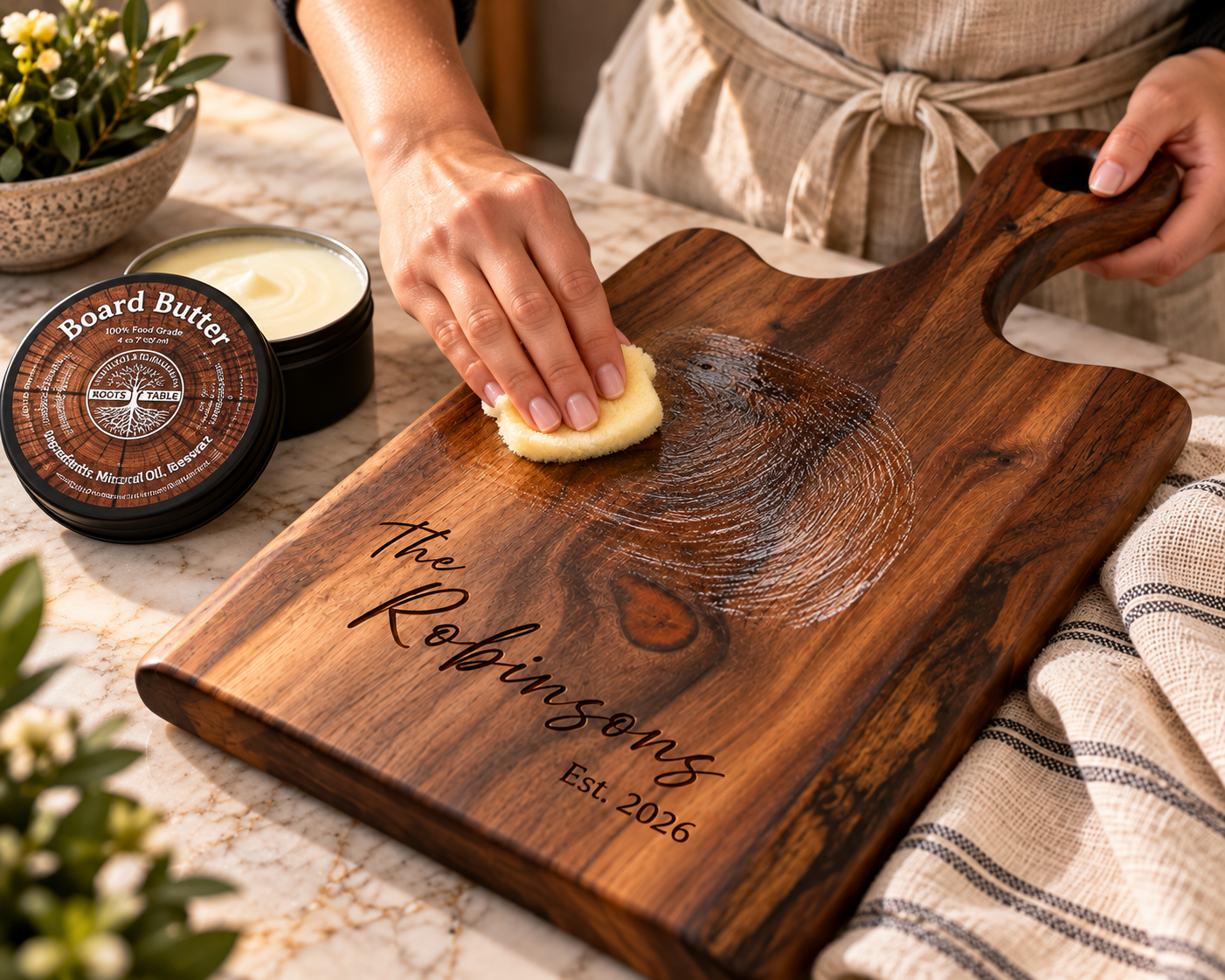
A proper finish for a food-contact surface requires food-safe sealants, typically mineral oil, beeswax, or food-grade polyurethane. Applying these properly is not a five-minute job. Each coat must be applied evenly, allowed to cure, and often sanded lightly before the next coat goes on.
A high-quality handmade board typically receives four to six finish coats, with the craftsperson working to build protection without creating a plastic-like appearance. The goal is a finish that's food-safe, water-resistant, durable enough to stand up to kitchen use, and beautiful enough to showcase the wood's grain and color.
This finishing process can add 8 to 12 hours to a project, but it's what determines whether a board will last five years or fifty years. The right finish, paired with proper care over the decades, is what allows a quality board to outlive nearly every other tool in your kitchen.
One of the major advantages of handmade boards is the ability to customize them. Whether it's a specific wood species, custom dimensions, engraving, or special features, artisans can adapt to a buyer's needs in ways factories cannot.
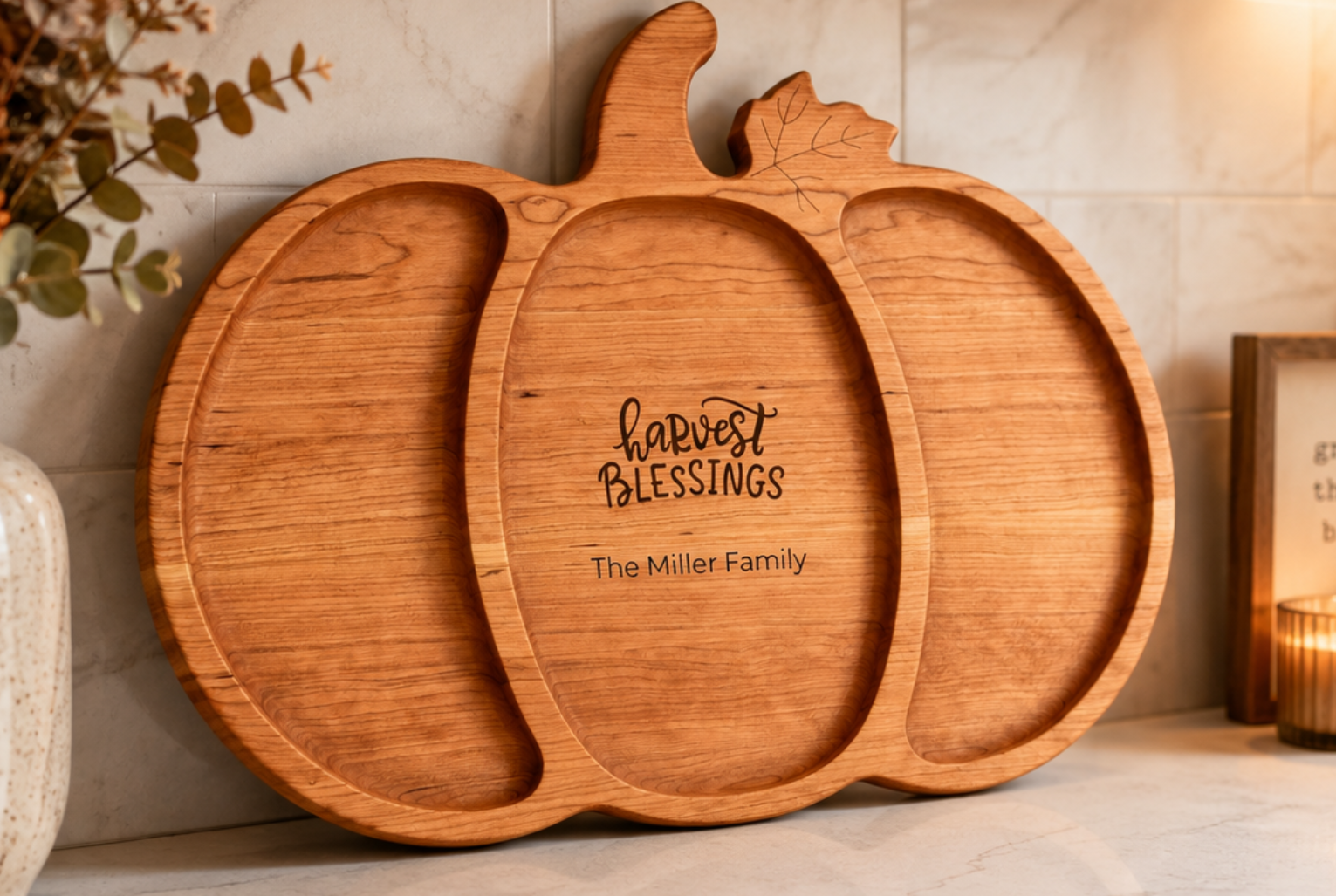
Custom engraving adds significant value and cost. A hand-engraved name or design on a wooden board requires either skilled hand engraving (expensive and time-consuming) or digital engraving equipment (also costly, with operator time included). This personalization transforms a board from a kitchen tool into a gift or keepsake, which buyers are willing to pay premium prices for.
Custom sizing and wood selection also factor into cost. A buyer who requests a specific wood variety or custom dimensions must essentially commission the board to their specifications, which means no mass production efficiency, no existing inventory to pull from, and specialized labor.
Many handmade board makers are conscious of environmental impact and source materials responsibly. This commitment adds cost.
Sustainable sourcing, whether from certified forests, reclaimed urban wood, or salvaged timber, typically costs more than conventional lumber. These sustainable wood sourcing practices reduce environmental harm, support forest stewardship, and often result in more interesting and unique wood. But they require the maker to research suppliers, maintain relationships with specialty lumber yards, and sometimes pay premium prices.
Quality boards also support sustainability through longevity. A handmade board that lasts fifty years is a far more sustainable choice than a mass-produced board that ends up in a landfill after three to five years, even if the handmade option costs more upfront.
Every board a craftsperson makes carries a share of their business overhead: rent or mortgage for a workshop, utilities, tool maintenance and replacement, insurance, and indirect labor like administrative work and customer service.
A one-person shop making forty handmade boards per month must divide annual overhead across those boards. A factory making four thousand boards per month can spread the same overhead across one hundred times more units.
This is why pricing based solely on material cost doesn't work for artisans. The real formula includes materials plus a reasonable hourly labor rate plus overhead recovery. That formula always yields a higher per-unit cost than mass production.
Here's a counterintuitive point: handmade doesn't mean inconsistent. The best artisans develop rigorous quality control processes to ensure every board meets high standards.
This requires time. Every board is inspected for finish quality, flatness, stability, and food safety. Defective pieces are rejected, refinished, or discarded, representing lost time and materials. Mass production factories accept higher defect rates as normal. Consumer reports and product reviews often mention mass-produced boards that arrived with warping, finish bubbles, or loose joints. These defects are treated as inevitable and managed through returns policies.
Handmade producers take a different approach: quality control costs money upfront, but it protects reputation and customer satisfaction.
Understanding why handmade wood boards cost more requires comparing the true cost of ownership, not just the price tag.
A mass-produced cutting board might cost $30 to $50 and last three to five years. Once it develops gouges, absorbs odors, or warps, it ends up in the trash. Total cost over ten years: replacing it two or three times, plus environmental cost.
A handmade hardwood board costs significantly more upfront, perhaps $90 to $200 depending on size, wood, and features. But it will last ten, twenty, or fifty years with proper care. It may never need to be replaced. Over twenty years, the true per-year cost of a handmade board often ends up lower than the mass-produced alternative.
When you buy a handmade board, you're supporting someone who has invested years in learning their craft. You're keeping a skill alive, supporting a small business, and contributing to local economies.
This intangible value is real. The board you buy directly from a craftsperson supports their livelihood in a way factory workers benefit only indirectly. Artisans who make quality goods tend to reinvest in their communities, support local suppliers, and share knowledge with other makers.
Why do handmade wood boards cost more? Because they represent quality materials, skilled labor, thoughtful design, durability, and sustainability. They are made to last, to perform, and to be cherished. A handmade board is an investment in your kitchen, your entertaining, and your family's memories. It's a piece that can be passed down, customized, and cared for over decades. The premium cost reflects a fundamentally different approach to making things: one that prioritizes longevity, beauty, and craftsmanship over efficiency and profit margins. When you understand where the cost comes from, the price of a handmade board becomes not an expense, but an investment in quality that will reward you with years of use, enjoyment, and stories.