Home > Shop All Personalized Gifts > Buying Guide - How To Choose The Right Cutting or Charcuterie Board
We’ve shipped thousands of boards across North America for wedding gifts, housewarmings gifts, anniversary gifts and so much more.
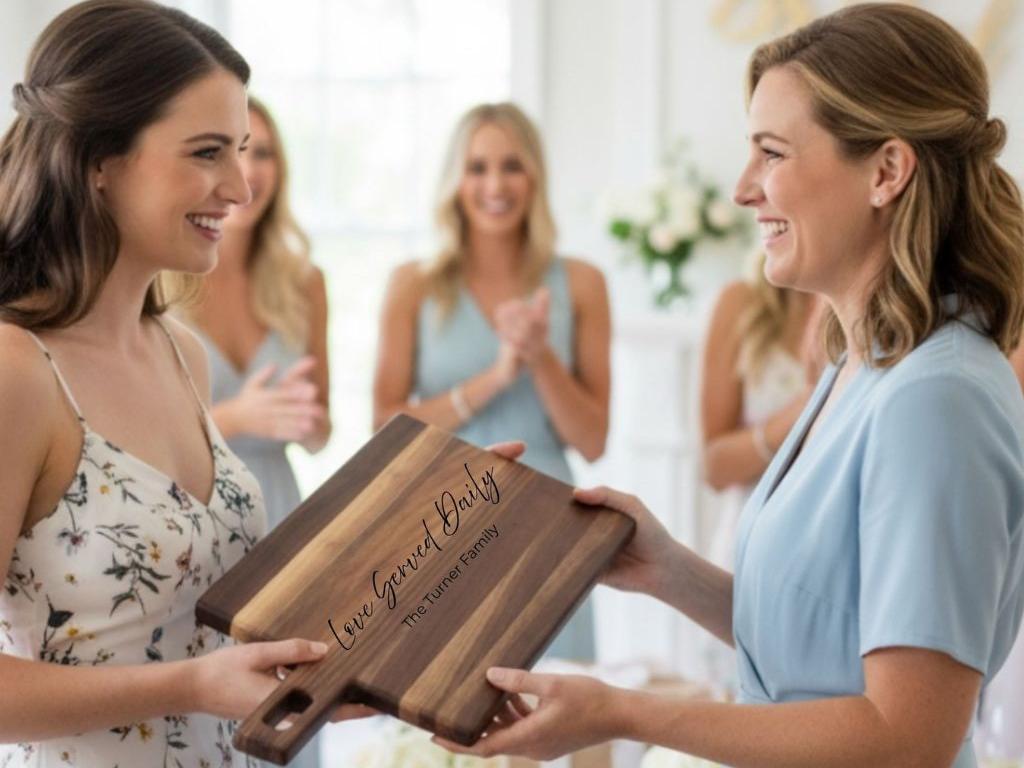
When you give a board like this, it may be opened in front of a room full of people. It may live on a kitchen counter for years. It may hang on a wall as an heirloom piece.
It reflects your judgment.
That’s why choosing the right board matters.
You don’t need to understand hardwood. You need to understand the moment.
Before you choose wood.
Before you choose size...
Picture how they will use it.
Not every board is built for the same job.
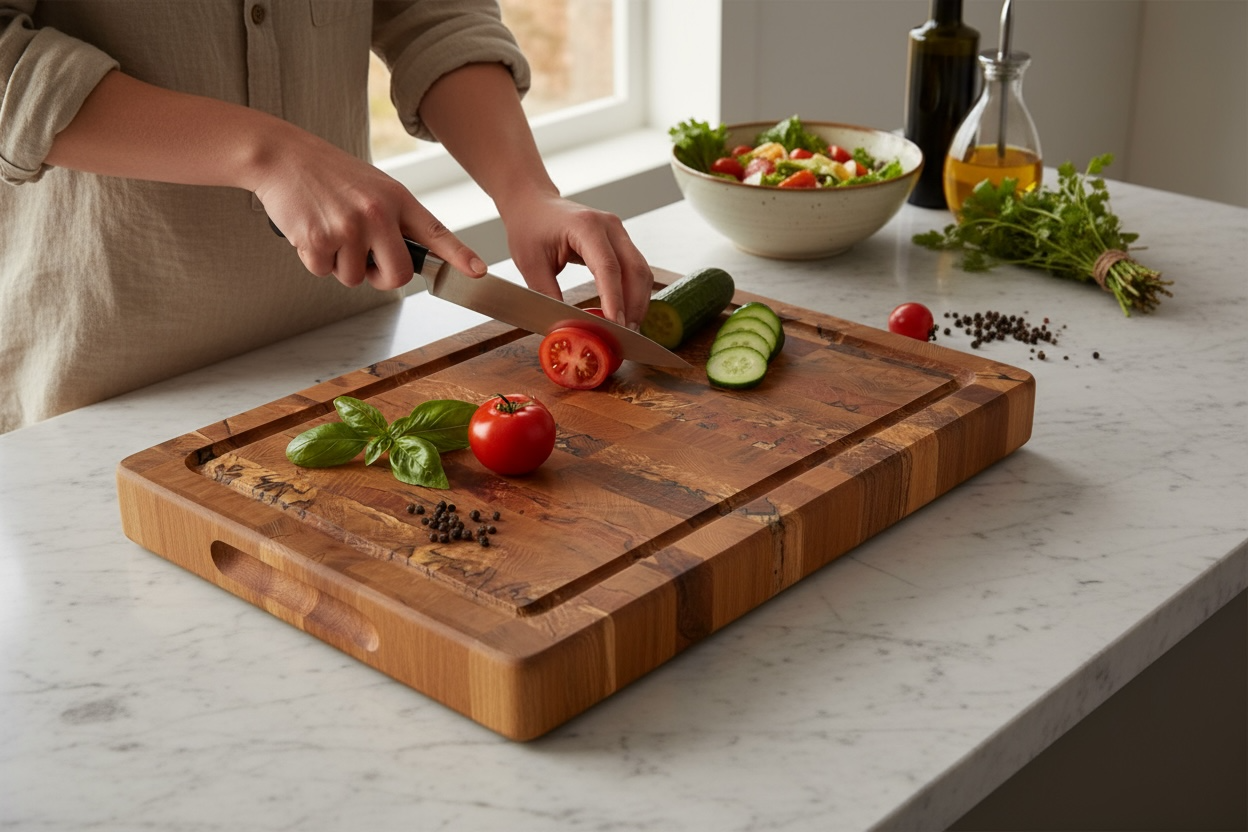
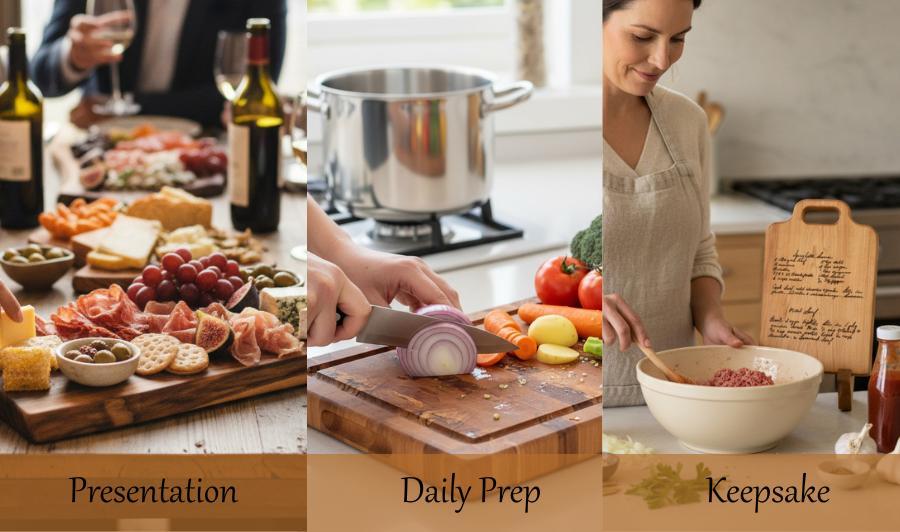
✓ For daily kitchen use…
Start with a Cutting Board.
Built to work hard and still look stunning doing it.
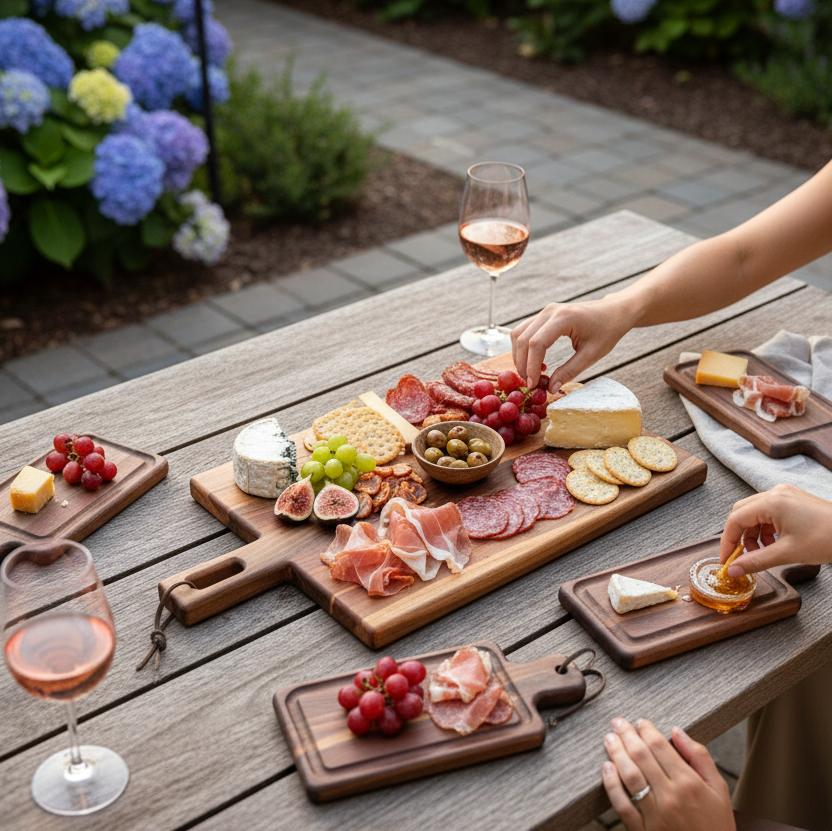
✓ For hosting and presentation…
Start with a Charcuterie Board.
Built to gather people. Built to create a wow moment.
If you already know you want engraving… Choose the board style first. Then personalize it.
Purpose first. Personal second.
That’s how you get this right.
Same craftsmanship. Different purpose.
If the board will be used for regular meal prep… vegetables, proteins, daily kitchen work… you want a true cutting board.
“Cutting board” and “chopping board” mean the same thing.
What matters is construction.
A proper cutting board is built from multiple pieces of hardwood intentionally joined together.
That construction changes how your knife interacts with the surface and how the board performs over time.
There are two primary types:
The wood fibers run lengthwise.
When you cut on an hardwood edge grain cutting board, the blade moves with the grain instead of against it.
This creates a durable surface that handles everyday prep very well.
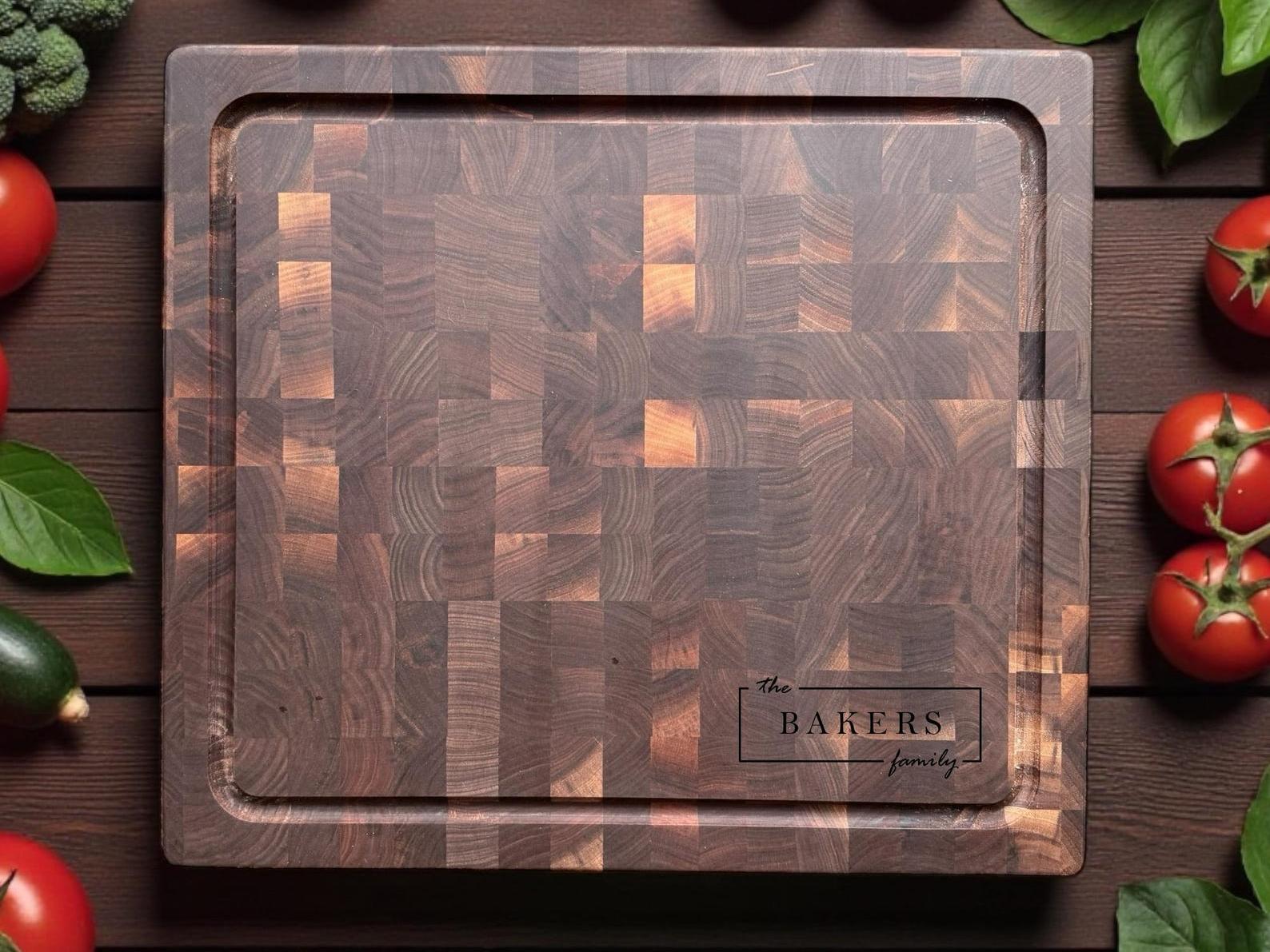
The wood fibers face upward, like a bundle of drinking straws standing vertically.
When a knife comes down on a end grain cutting board, it passes between the fibers rather than slicing across them.
That is why end grain cutting boards are considered the most knife friendly and are often preferred by serious home cooks and professional chefs.
They absorb impact and recover more effectively over time.
You may also hear the term face grain.
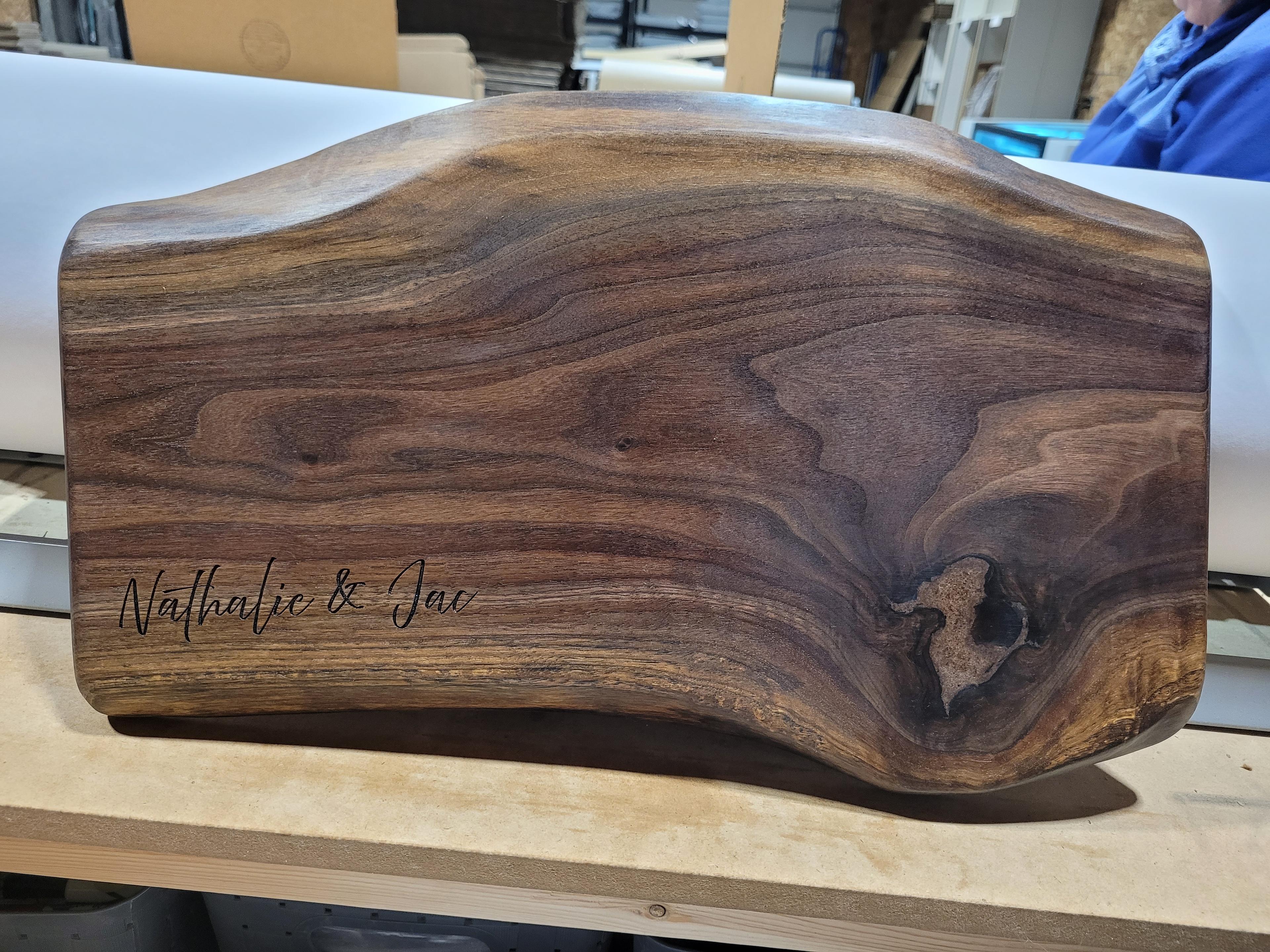
Face grain means one solid slab of wood, no glued strips. Designed for presentation, not heavy chopping.
Because the fibers run horizontally, they will show knife marks more easily under repeated chopping.
For that reason, face grain charcuterie boards are best suited for eye-catching serving, not heavy chopping.
Yes, you can absolutely serve on a cutting board. We recommend cutting or chopping on one side and presentation on the other.
If performance and longevity in the kitchen come first…
Cutting boards are your lane.
Charcuterie simply means cured meats. Over time, the word has become shorthand for serving meats, cheeses, fruit, bread, and small bites beautifully.
A charcuterie board, serving board, and cheese board all fall into this category.
These boards are built for hosting and presentation.
They are designed to:
frame food beautifully
highlight natural wood character
create visual impact at the table
Grain movement, live edges, tone, and overall shape matter more here than heavy knife absorption.
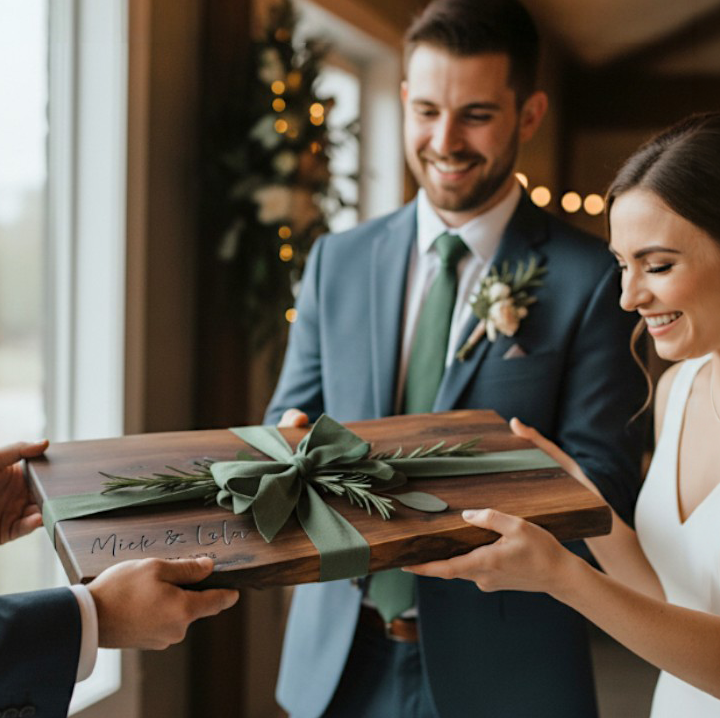
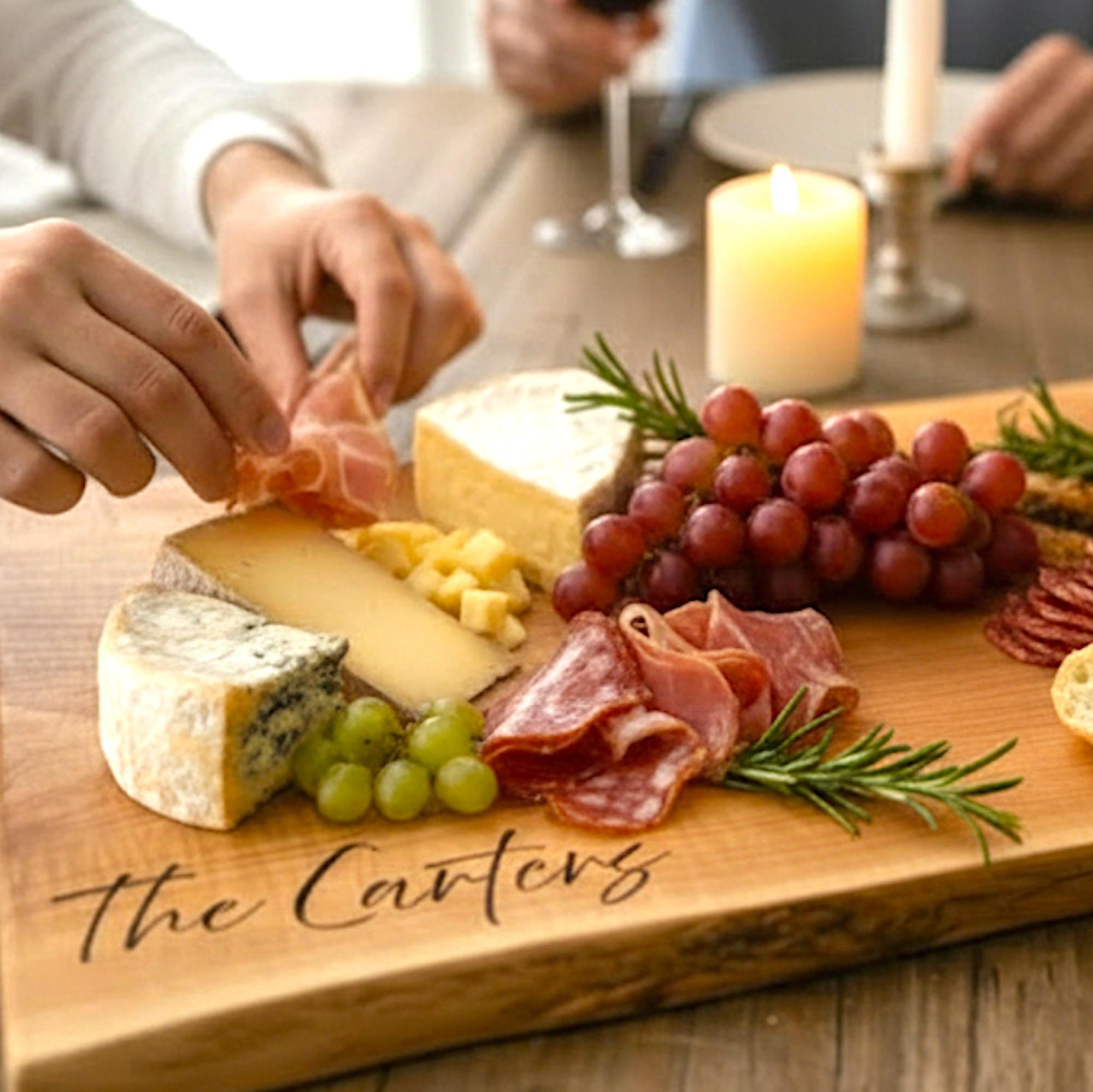
Charcuterie boards are often face grain, meaning the broad natural grain pattern is what you see.
We also build glued serving boards that combine multiple boards for added stability and character. Some designs feature organic shapes and may include epoxy to stabilize natural voids.
While epoxy used in our boards is food safe, it is not designed for heavy chopping. These boards are built for presentation first.
You can slice cheese, fruit, or bread lightly on them. But they are not meant for breaking down meat or repeated heavy chopping.
If hosting and presentation come first…
Charcuterie boards are your lane.
If you want to go deeper before choosing… here's how wood types differ.
When choosing a hardwood cutting board or charcuterie board, most buyers begin with light vs dark preference.
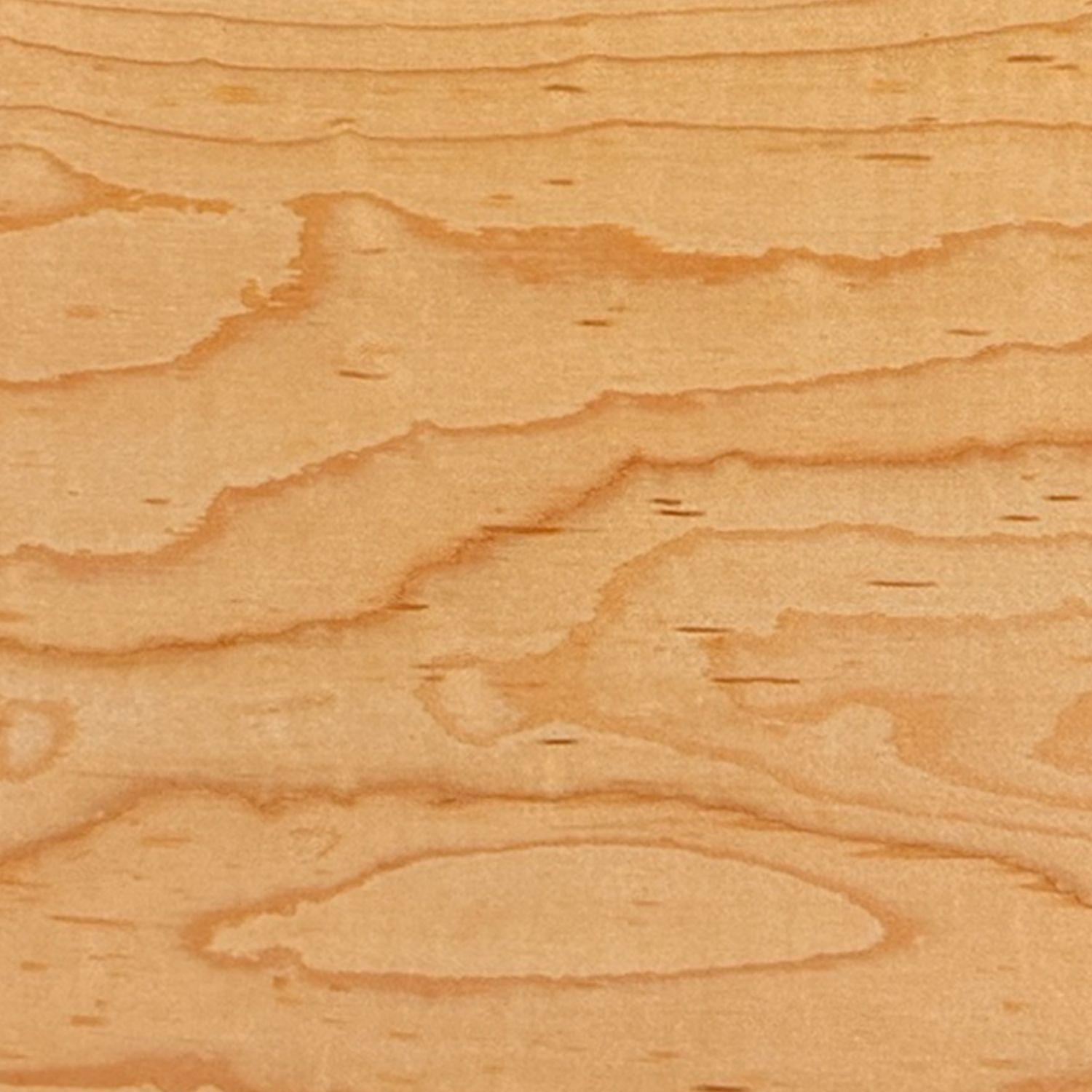
Light. Clean. Bright.
This is our highest performing wood for serious cutting because it is dense and tight grained.
If daily prep and long-term durability are the priority, sugar maple performs best over time.
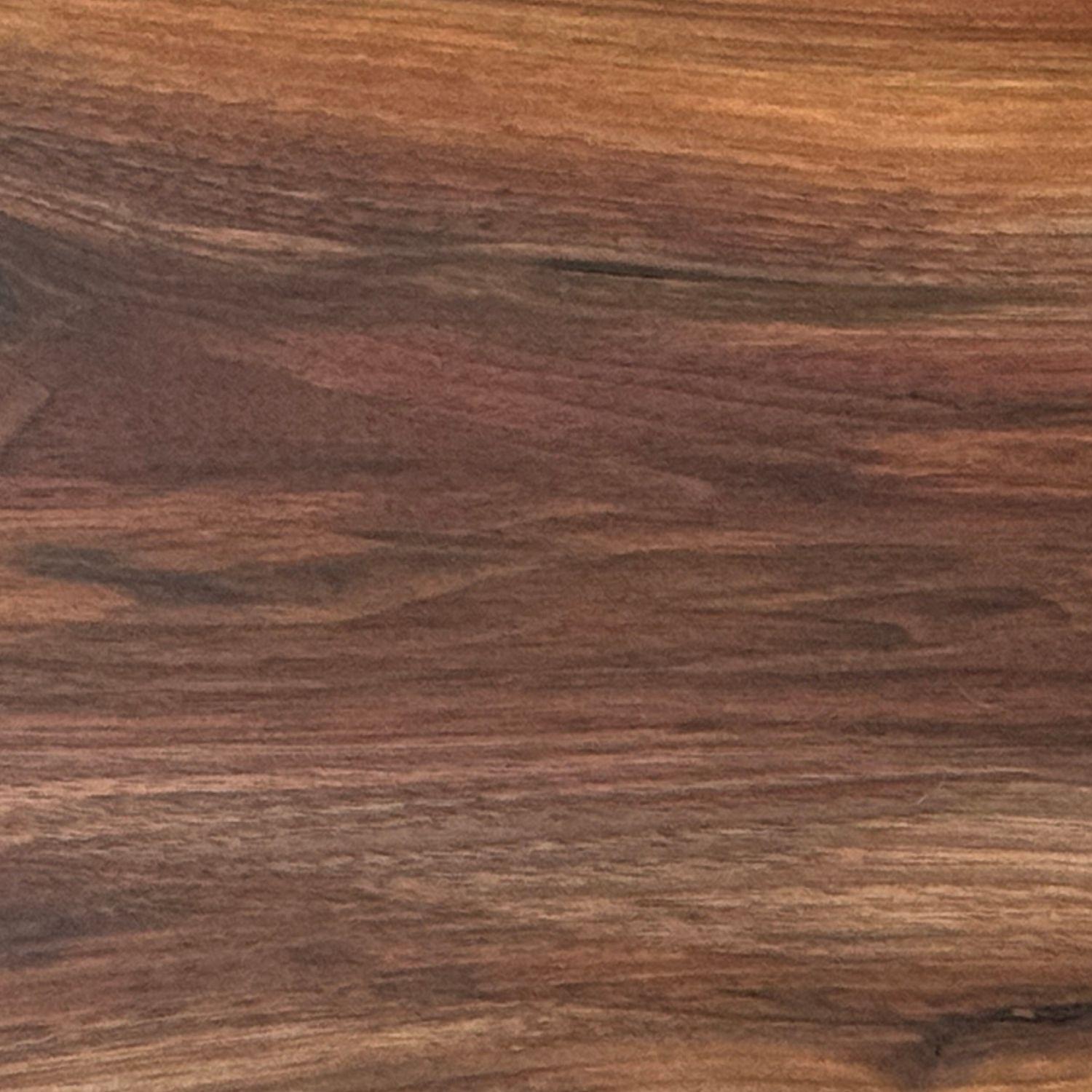
Deep. Rich. Bold.
From a pure hardness standpoint, it does not compete with sugar maple. But visually, walnut delivers unmatched contrast and depth. It is often selected when aesthetic impact matters most.
A walnut end grain board is still a very good cutting board. It simply prioritizes beauty as much as function.
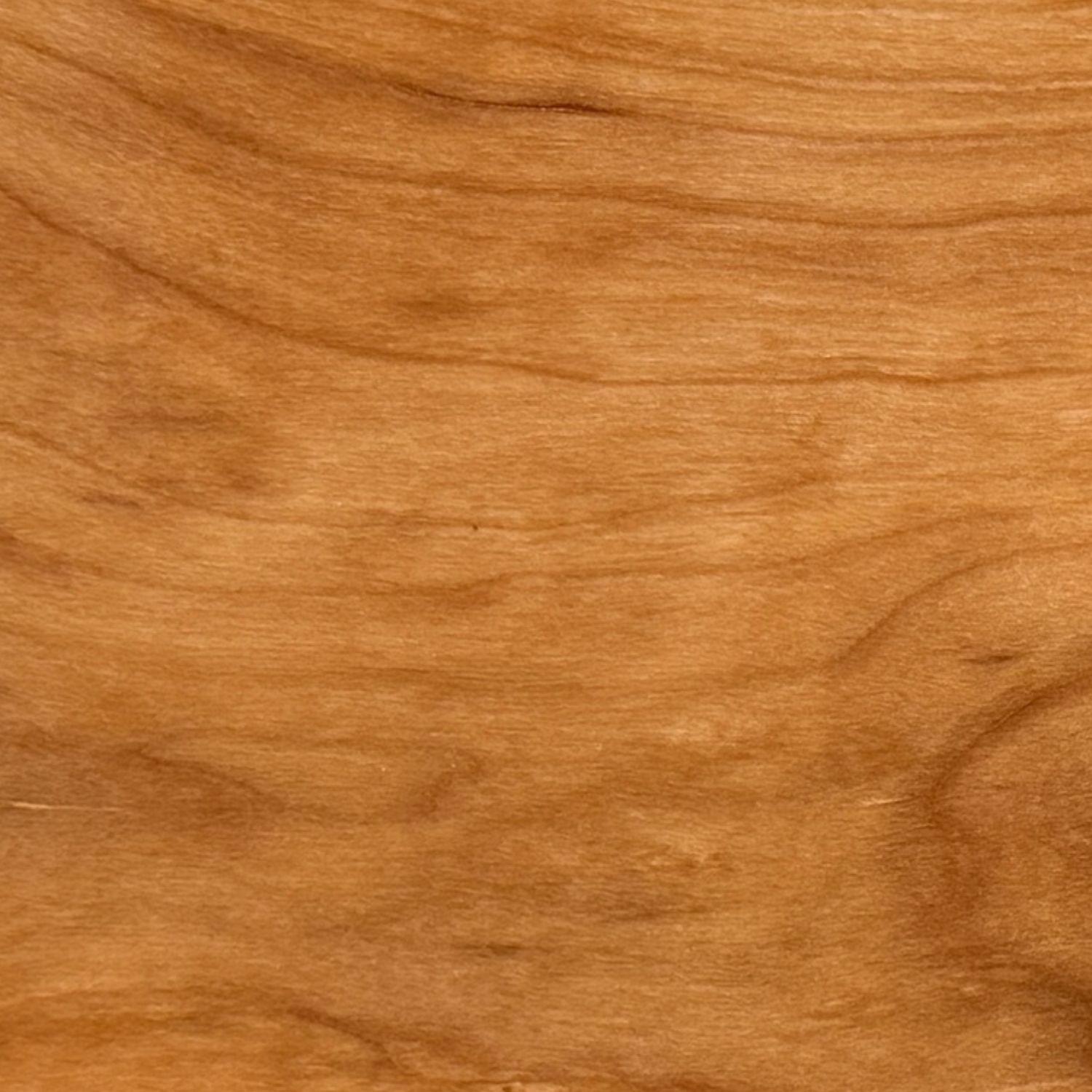
Warm. Refined. Balanced.
Cherry deepens naturally over time and develops a rich patina.
It performs well in edge and end grain construction and is often chosen for its warmth and evolving character.
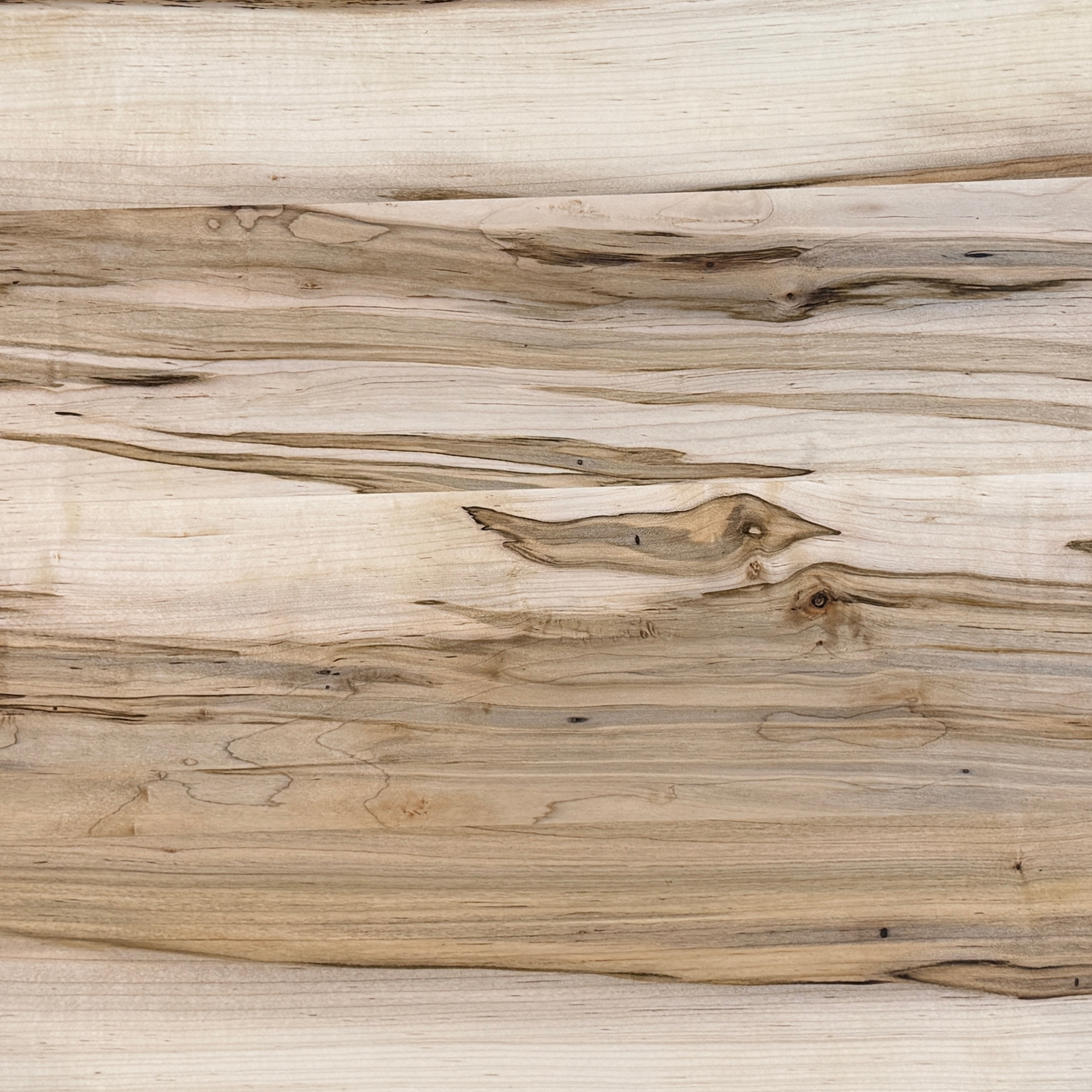
Light with natural streaking and dramatic movement.
Ambrosia is soft maple. Yes, it’s still a hardwood. It is chosen more for visual character than maximum cutting performance.
It works well in the right construction, but most buyers choose ambrosia because every piece looks distinct and expressive.
We do not stain our boards. What you see is the natural character of the wood.
No artificial tones. No surface dyes. Just real wood.
Once you’ve chosen the wood… personalization is what makes it theirs.
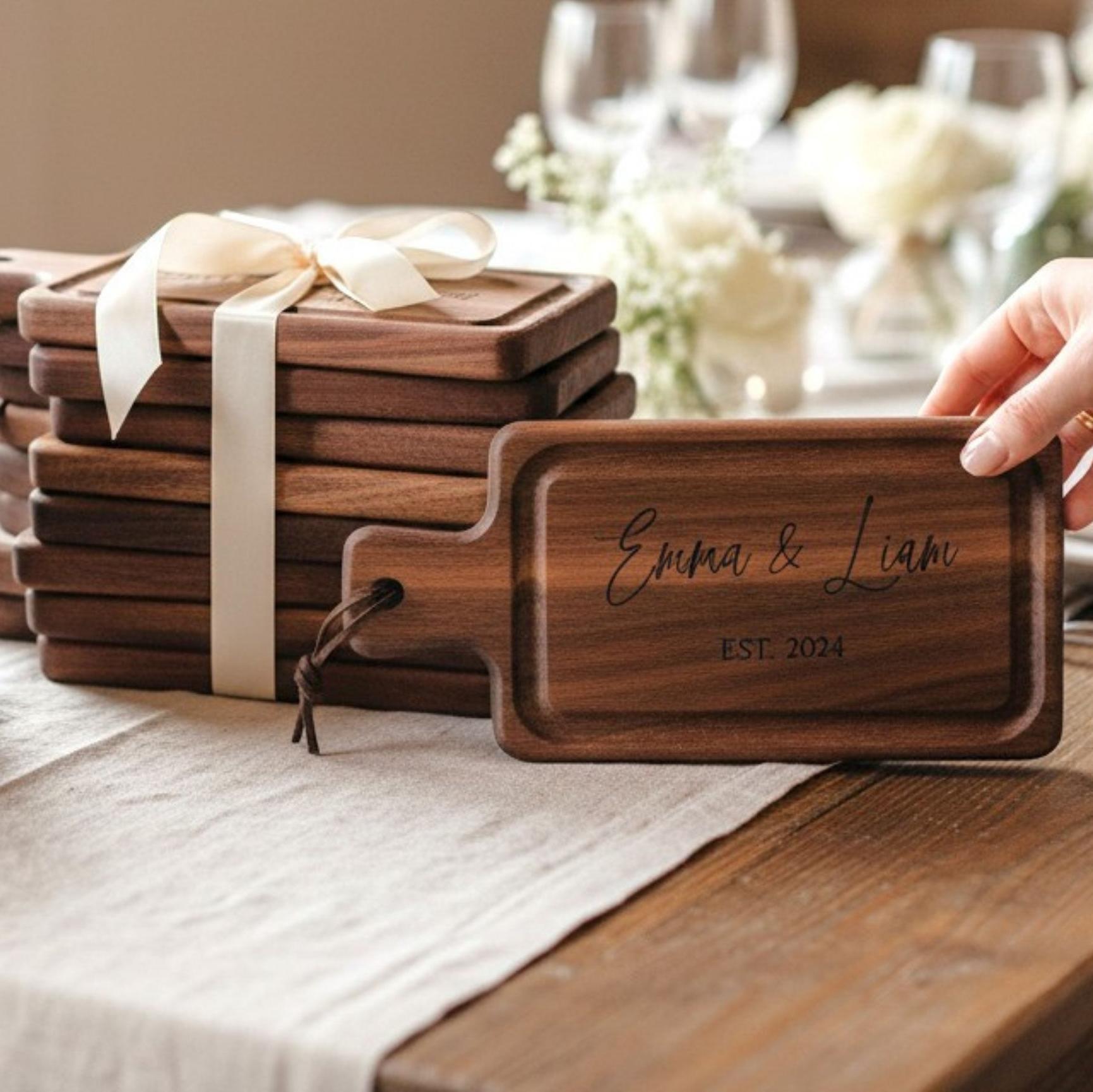
This is where a beautiful board becomes unmistakably theirs. The engraving is what turns a thoughtful gift into something permanent.
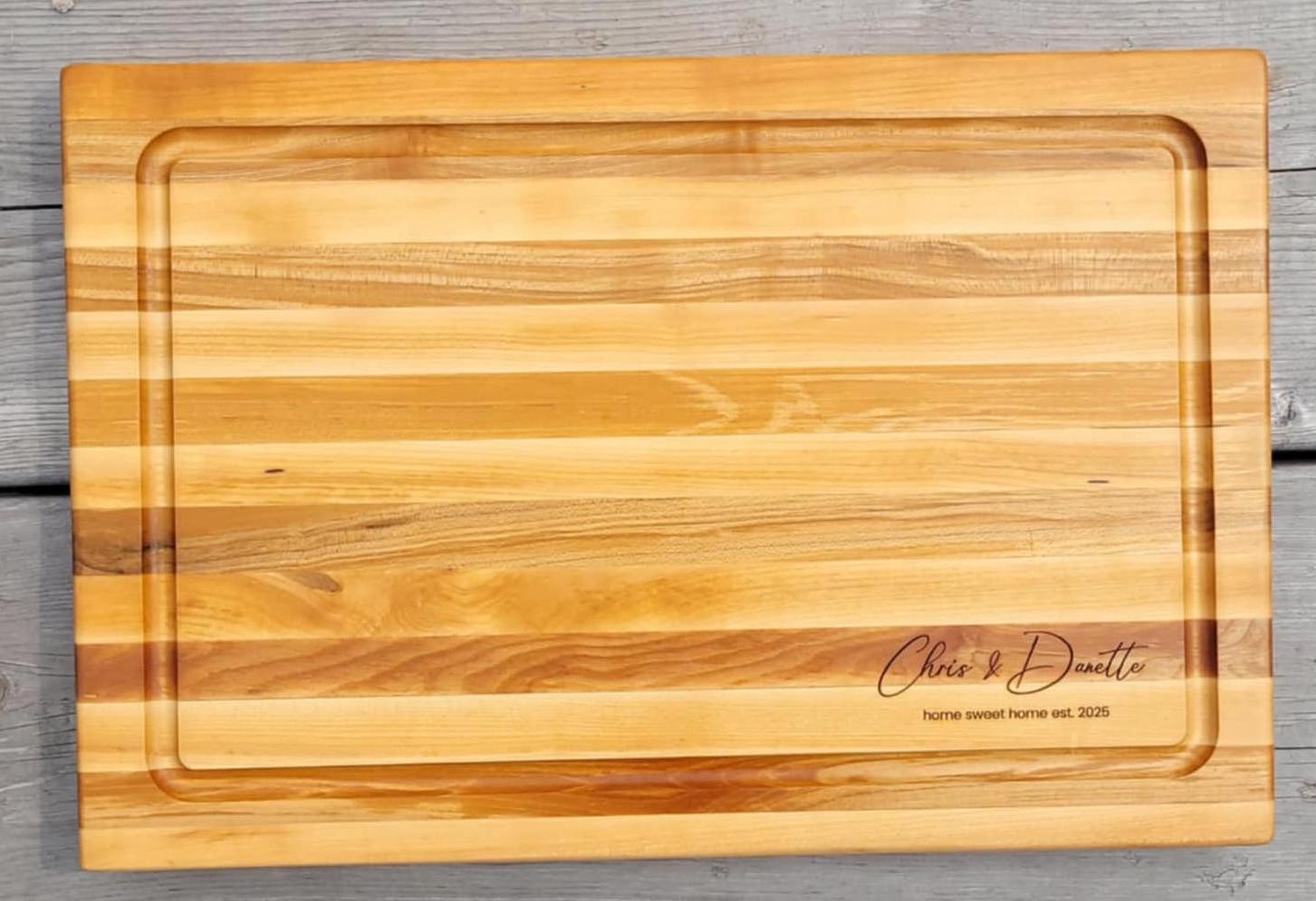
All board styles can be engraved.
Most customers choose one of our included design layouts. They are balanced specifically for hardwood and sized correctly for each board.
At checkout, you simply enter your wording exactly as you want it engraved.
We engrave what is submitted.
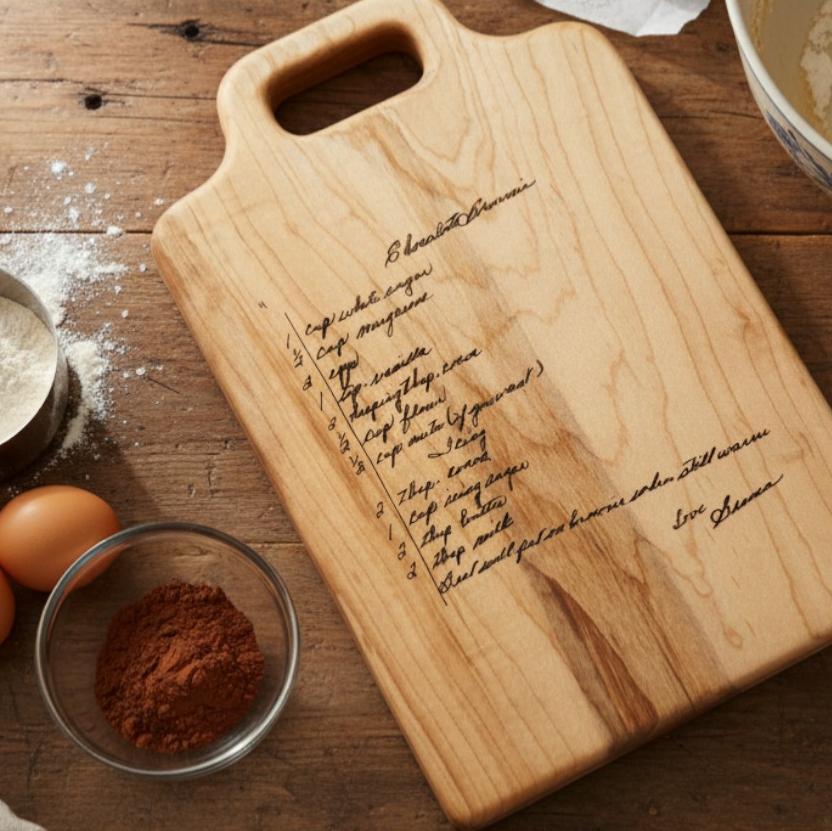
If you want something custom... a logo, handwriting, or a recipe... choose the custom option and send us your file after purchase. If anything needs adjustment for clarity, we will guide you.
If you would like to see a proof before engraving, you can request one at checkout. Otherwise, we proceed using the details you provide.
Take a moment. Make sure it says exactly what you want.
Once it’s engraved… timing matters.
This question sits quietly in almost every buyer’s mind.
Here is what actually happens:
Most orders process in 3 business days
Proofs are sent by email if requested
Tracking is provided once shipped
Delivery typically takes 4–6 business days
Expedited shipping is available
If you have a tight deadline, contact us so we can help.
No guessing.
The right board feels obvious once the purpose is clear.
Built for daily use.
Built for hosting.
Built to be remembered.