
There's a particular magic to fall entertaining. The season practically invites people to gather. The weather turns cool enough to make hosting feel less like a burden and more like an intention. And if you're looking for a way to welcome guests without spending hours in the kitchen, an easy fall charcuterie board is your answer.
Unlike a sit-down dinner, a charcuterie board is pure hospitality without the heat or stress. You arrange it ahead of time, set it at the center of your table, and let your guests graze while conversation flows. For fall, that simplicity becomes even more powerful because the season's ingredients do half the work for you. Apples, pears, dried figs, candied nuts, honey, and rich cheeses practically arrange themselves into something that looks intentional and tastes like autumn.
This guide walks you through the ingredients, sizing, assembly logic, and flavor pairings that make a fall charcuterie board feel both effortless and special. Whether you're hosting a small gathering, a gift-giving occasion, or simply want to create a beautiful moment for your family, this is the framework that works every single time.
Fall produces a lineup of ingredients that align naturally with the flavors of cheese and cured meat. Summer boards lean bright and refreshing. Winter boards go heavy and celebratory. But fall occupies its own space. It's warm and cozy, but not heavy. It's abundant without feeling excessive.
The fruits alone make the difference. Pears are at their peak in September and October. Apples are everywhere and stay fresh longer than softer fruits. Grapes deepen in color and sweetness. And dried fruits like figs, apricots, and cranberries bring concentrated flavor without the worry of quick spoilage.
Add to that the rise of spiced nuts, honey, and warming accompaniments like fig jam or apple butter, and you've got a board that feels uniquely seasonal without requiring any exotic ingredients. It's genuinely easier to build a fall charcuterie board than one in any other season.
A well-balanced charcuterie board follows a simple structure. Think in categories rather than exact quantities, and you'll never feel lost. If you want a deeper reference, our guide to the best food for a charcuterie board breaks down every category in detail.
Choose three cheeses with distinct personalities: one soft, one aged, and one bold.
Brie or Camembert (the soft choice). These mild, buttery cheeses pair beautifully with fall fruits. Brie is especially versatile because its subtle earthiness doesn't fight the season's sweet elements. Serve it slightly warmed, and guests will understand why you put it there.
Sharp Cheddar (the aged choice). A good aged cheddar brings structure and flavor. Pair it with dried fruits and nuts, and it becomes the anchor of the board. Its bold personality needs the sweetness of figs or the crunch of candied pecans to shine.
Blue Cheese (the bold choice). Blue cheese polarizes, which is exactly why it belongs on a board. It gives people a choice. The trick is pairing it right: serve it with honey, pears, and candied walnuts, and even skeptics often come around. The sweet-and-salty contrast is almost impossible to resist.
Cut cheeses into wedges or thick slices rather than pre-cubed chunks. It looks more intentional, stays fresher longer, and gives guests the satisfaction of choosing their own portion size.
Aim for three types of meat, each with a different texture and flavor profile.
Prosciutto. Delicate, salty, and elegant. This is the gateway meat for charcuterie. It's approachable and pairs beautifully with figs and pears. Fold it loosely on the board rather than laying it flat; it looks more inviting and takes up less space.
Salami. Go for a spiced variety that nods to fall. Some cured meat shops carry salami with fennel or other warming spices. If you can't find a fall-specific version, a basic hard salami works fine. Slice it thin and fan it out.
Smoked Sausage or Spiced Chorizo. If you want something with more presence and warmth, a smoked sausage adds a savory, slightly smoky note that feels very on-brand for fall. Slice it thin and arrange it prominently.
The total meat should cover about one-third of your board by area, not by weight. Cured meats are rich, and a little goes a long way when balanced with cheese and produce.
Fresh fruits bring crunch, moisture, and brightness. Dried fruits bring concentration and sweetness.
Fresh Apples. Slice them just before serving to prevent browning. A light brush of lemon juice keeps them fresh-looking. Choose a variety with some tartness (Granny Smith mixed with Honeycrisp works beautifully) so the sweetness of other elements doesn't overwhelm.
Pears. Slice them slightly thinner than apples. They're softer and pair wonderfully with both blue cheese and brie. Add them closer to serving time since they bruise more easily.
Grapes. Choose deep-colored varieties like Concord or red grapes for visual pop. They're forgiving, shelf-stable during the party, and add color without effort.
Dried Figs. These are the MVP of a fall board. Their jammy sweetness pairs with nearly every cheese. If you can only choose one dried fruit, choose figs.
Dried Apricots. Slightly tart and sweet. They bridge the gap between the intensity of figs and the lightness of fresh fruit.
Dried Cranberries. Less common than other options but deeply fall. A small handful of dried cranberries adds color and a subtle tartness that prevents the board from feeling one-note sweet.
Nuts add essential texture and richness. Toast them yourself for best flavor, or buy them pre-roasted.
Candied Pecans. The star ingredient for fall. Their buttery flavor and honey coating make them feel special. Buy them or make them at home by tossing roasted pecans with maple syrup and a pinch of salt, then roasting again briefly.
Roasted Almonds. Plain roasted almonds provide crunch without extra sweetness. They balance boards that are heavy on honey and dried fruit.
Walnuts. Their slight bitterness is sophisticated and pairs well with both brie and blue cheese. Raw walnuts work, but roasted ones taste better.
Aim for a mix of sweet and plain nuts so the board doesn't become cloying.
Crackers are the vehicle for the board's main flavors. Choose a variety of textures and flavors.
Crusty Baguette Slices. Toast them lightly if you want, or serve them room temperature. They're sturdy enough to hold soft cheese and work with any topping.
Whole Grain or Rye Crackers. These hearty crackers complement sharp cheddar and smoked sausage beautifully. Their subtle flavor doesn't fight the ingredients you've chosen.
Pretzel Crisps. The saltiness provides contrast to sweeter elements like honey, figs, and brie.
Don't skimp here. Crackers and bread should take up about one-quarter to one-third of your board by space. They're what makes the whole thing actually functional for eating.
Small additions transform a board from nice to memorable.
Raw Honey. Drizzle it directly on top of soft cheeses or in a small bowl on the side. Honey with blue cheese and candied nuts is a flavor combination worth remembering.
Fig Jam or Apple Butter. Serve in small bowls. These spreads pair with nearly everything on your board and add a pop of color.
Whole Grain Mustard. A small bowl of mustard gives guests another pairing option, especially for the cured meats.
Fresh Rosemary Sprigs. A few short sprigs of rosemary tucked between ingredients add visual interest and a subtle fragrance. They're completely optional but give the board a polished, intentional look.
Size depends on your guest list and the occasion.
For 4 to 6 people: A 14 to 16-inch board works perfectly. This is intimate entertaining. It's big enough to feel generous but small enough that every ingredient stays within reach. Round or rectangular both work well at this size.
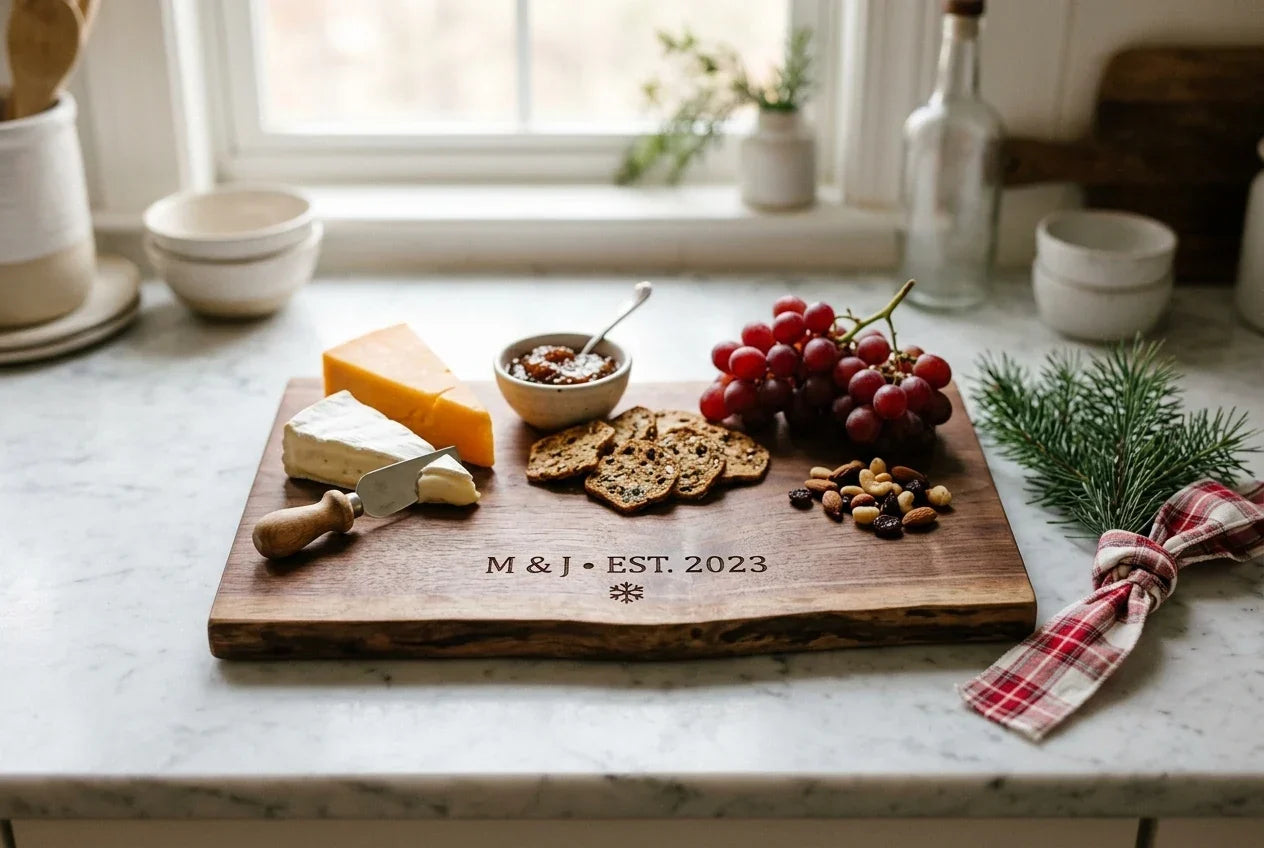
For 8 to 12 people: Move to an 18 to 20-inch board. This is the sweet spot for dinner parties and small celebrations. The board sits comfortably at the center of a table and gives guests room to serve themselves without crowding. A generously sized live edge charcuterie board handles this group size beautifully while doubling as a centerpiece.
For 12 to 20 people: An extra-large board at 24 inches or more, or consider two boards placed side by side. Two boards look intentional and prevent bottlenecking around a single platter.
The key principle: you want roughly 2 to 3 ounces of cheese per person, 1 ounce of cured meat per person, and generous amounts of supporting ingredients. That math matters less than the visual principle: the board should look abundant but not overcrowded. There's a difference between "filled" and "stuffed," and filled always looks better.
Build your board in this sequence, and it comes together effortlessly. If you're brand new to this, our traditional charcuterie board making guide walks through the fundamentals step by step.
Step 1: Place the cheeses first. Arrange your three cheese selections in a triangle or scattered pattern, creating anchor points across the board. Leave space between them so each cheese claims its own territory.
Step 2: Add the cured meats. Fold prosciutto loosely around one section. Arrange salami or sausage near a different cheese variety. Let the meats curve around the cheeses rather than filling all remaining space.
Step 3: Add fresh fruits. Distribute apple slices, pear slices, and grapes across the board, filling some gaps but leaving room to breathe. Arrange them in small clusters or scattered arrangement. Either works, as long as they're accessible.
Step 4: Tuck in the dried fruits. Figs, apricots, and cranberries go in smaller piles. You're adding visual interest and flavor variety, not filling empty space. If the board looks full at this point, you're probably good.
Step 5: Add nuts and final elements. Candied pecans, roasted almonds, and walnuts go in small clusters. A small bowl of honey, jam, and mustard sits at the edge. Fresh rosemary sprigs fill any awkward gaps.
Step 6: Add crackers and bread. This is the last step because crackers look best when they're fresh-looking at serving time. Lean them against cheeses or stand them upright in small stacks.
The entire assembly takes about 15 to 20 minutes once you've cut everything. You can prep cheeses, fruits, and nuts hours ahead, then assemble the actual board 30 minutes before guests arrive. This is stress-free hosting.
Understanding why flavors pair makes you confident improvising when you don't have a specific ingredient on hand.
Pear with Blue Cheese and Honey. This is the classic for a reason. The sharp, creamy intensity of blue cheese needs something sweet to balance it. Pears bring natural sweetness, and honey amplifies it. It's one of those combinations where the whole becomes better than the parts.
Apple with Sharp Cheddar and Candied Nuts. Apples have a slight tartness that cuts through the richness of sharp cheddar. Add candied pecans, and you've got sweet, sharp, buttery, and crunchy all at once. It's a complete flavor and texture experience.
Prosciutto with Fig and Brie. The saltiness of prosciutto wants sweetness. Figs deliver that sweetness, and brie brings smoothness and mild dairy richness. Wrap them together, and you've got a bite that feels both elegant and simple.
Salami with Whole Grain Mustard and Rye Cracker. Spiced salami pairs with the tangy heat of mustard, and rye cracker brings earthiness and structure. This combination is less "sweet and sophisticated" and more "savory and satisfying."
Smoked Sausage with Apple Butter and Crusty Bread. Smoked sausage is rich and slightly fatty. Apple butter brings sweetness and acidity that cut through that richness. Crusty bread absorbs the flavors and gives you something to hold.
These pairings aren't rules. They're templates. Once you understand the logic, you can confidently mix and match based on what you find at the market.
Charcuterie is forgiving, but a few details matter. These small habits are the backbone of stress-free dinner hosting, because they let you do the work early and stay present once guests arrive.
Make it ahead. Cut cheeses, fruits, and nuts several hours before guests arrive. Store them in airtight containers in the fridge. Assemble the board itself about 30 minutes before serving so bread and crackers stay fresh.
Bring cheese close to room temperature. Hard cheeses like sharp cheddar taste better at room temperature than straight from the fridge. Soft cheeses like brie are best slightly cool but not cold. Pull the board from the fridge 15 to 20 minutes before serving to let cheeses relax.
Slice apples just before serving. Use a light brush of lemon juice to prevent browning. If you must slice them early, store them in a container with lemon water, then dry them before placing on the board.
Keep grapes cold. These benefit from staying in the fridge right up to serving. Cold grapes are crisper and more refreshing.
Toast the bread. Lightly toasted baguette slices stay crispier longer and add a subtle warmth that feels more intentional than room-temperature bread.

An easy fall charcuterie board isn't just something you make for yourself. It's one of the most thoughtful gifts you can offer. A handcrafted wooden board, especially a personalized one, becomes a keepsake. The board itself becomes as important as the first time it's used. That lasting quality is what makes a board such a strong choice among housewarming gift ideas that actually get used for years.
When you give a fall charcuterie board as a gift, you're giving two things: the beauty of the board itself and an invitation to entertaining. You're saying, "I imagine you hosting people you love." For that reason, fall boards make exceptional gifts for housewarmings, engagements, anniversaries, and "I'm thinking of you" moments.
A high-quality wooden board made from maple, walnut, or other premium hardwoods is built to last decades. It becomes part of how someone entertains, and that matters. Every gathering where it's used becomes a subtle reminder of the gift's giver.

An easy fall charcuterie board distills the season into one simple act: thoughtful gathering. It's proof that impressive hosting doesn't require complicated technique or hours of preparation. It requires intention, good ingredients chosen for the season, and the willingness to put something beautiful in the center of your table.
Set your board. Light a candle. Pour something warm to drink. Your guests will settle in. Conversation will flow. And when people ask for the secret to your stress-free hosting, you'll know it was never really complicated at all.