
If you're shopping for a new cutting board, you've probably noticed that maple and walnut dominate the market. Both are premium hardwoods prized by chefs and home cooks alike. Yet they differ in important ways: hardness, durability, maintenance, aesthetics, and yes, price. Understanding these differences helps you choose the board that fits your kitchen, your cooking style, and your long-term goals.
This article breaks down the comparison so you can decide with confidence.

The first question most people ask is simple: which wood is harder? The Janka hardness scale measures a wood's resistance to denting and scratching. It's a useful baseline but not the whole story.
Hard maple tops the scale at approximately 1,450 lbf (pounds-force). Black walnut, by contrast, sits at around 1,010 lbf. That's a meaningful gap. On paper, maple wins decisively.
In practice, this means maple resists scratches and knife marks better over years of use. A maple board can absorb thousands of knife cuts and still look relatively smooth. Walnut will show wear more visibly, with marks and small dents becoming more prominent over time.
But here's the catch: both woods are hard enough for daily cutting board use. Walnut's 1,010 Janka rating is still well above the 900 lbf minimum recommended by woodworking experts for food prep surfaces. It will last a lifetime with proper care.
Wood cutting boards have a surprising advantage over plastic when it comes to food safety. Hardwoods have natural antimicrobial properties and tight grain structures that actually trap bacteria and inhibit growth.
Maple stands out as the safest choice due to its density and low porosity. Its tight, fine grain resists knife grooves where bacteria could hide. Studies show that maple's density makes it more resistant to moisture retention, a key factor in bacterial growth. If you prepare raw meat regularly or worry about cross-contamination, maple offers the highest level of protection.
Walnut also performs well. It contains natural compounds with antimicrobial properties, and its moderate density provides solid food safety. However, its slightly higher porosity means it absorbs moisture more readily than maple. This requires more frequent oiling and more diligent maintenance to keep the surface hygienic.
Both woods are far safer than plastic when they're properly cleaned and maintained. The CDC confirms that wooden boards are not the culprit in foodborne illness outbreaks. The key is washing thoroughly with hot water and soap immediately after use, then allowing the board to dry completely.

Here, preference becomes paramount.
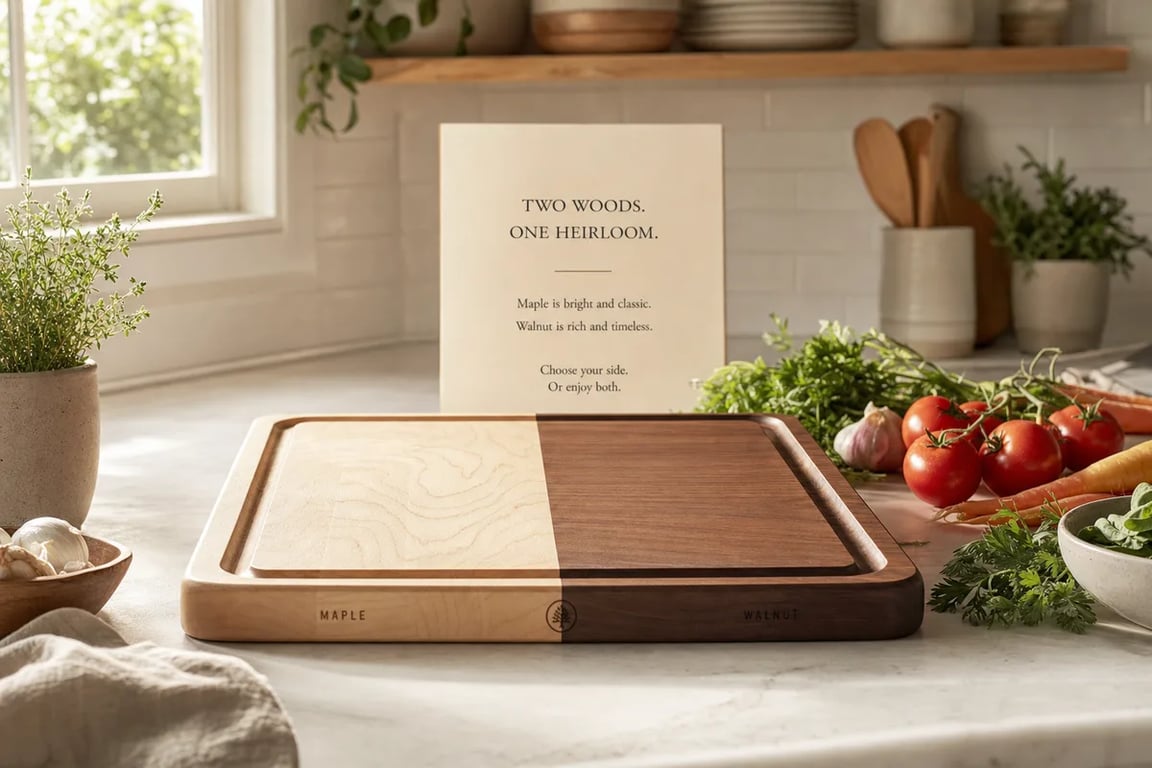
Maple offers a light, clean appearance with a fine, subtle grain. It feels modern and pairs easily with any kitchen style. The pale color makes it simple to spot when the board needs cleaning. Over years of use, maple gradually darkens to a honey tone, developing character while remaining relatively neutral. If you're drawn to minimalist design or want the board to fade into the background, maple delivers.
Walnut makes a visual statement. Its rich, dark chocolate brown tone commands attention. The grain is more pronounced, with striking figure variations when boards are made from different pieces. This deep color adds warmth and luxury to a kitchen. Walnuts also hide food stains better than maple, which some cooks appreciate. If you want your cutting board to be a design element, to complement dark cabinetry, or to look premium on a countertop, walnut excels.
The choice often comes down to your kitchen's existing palette and your personal taste. A light kitchen benefits from walnut's contrast. A darker kitchen might favor maple's lightness. Some cooks simply prefer the moody elegance of walnut, regardless of their decor.
This is where walnut gains important ground.
Maple's superior hardness comes with a trade-off: it's tougher on knife edges. A very hard surface can dull blades faster than a slightly softer wood. Professional chefs sometimes hesitate over maple for this reason alone. If you care about maintaining your knife sharpness with minimal honing, walnut's gentler surface is an advantage.
Walnut's relative softness creates a forgiving surface that reduces blade dulling. End-grain walnut boards (where the wood grain runs vertically) amplify this benefit further, offering the best knife protection available in a wood board.
If you use expensive knives or prefer to minimize honing maintenance, walnut is the more knife-friendly choice. For most home cooks, the difference is subtle, but it's worth considering if you're particular about your tools.
Maple requires less maintenance than walnut, hands down.
Maple's low porosity means it doesn't dry out or absorb water as quickly. You can oil it every 4 to 6 weeks and keep it healthy. It tolerates occasional exposure to standing water better than walnut. The lighter color also means you won't notice drying or patchy areas as easily.
Walnut demands more attention. Its higher porosity means it needs oiling every 2 to 4 weeks to maintain its appearance and prevent the wood from becoming brittle or developing surface cracks. Walnut absorbs water more readily, so drying it immediately after washing is crucial. Leaving a walnut board standing in a sink or stacked wet with other boards can warp it or encourage bacterial growth.
Neither board should go in the dishwasher. Heat and prolonged moisture wreck both woods. Hand wash with hot water and soap, dry immediately, and store upright or on edge to allow air circulation.
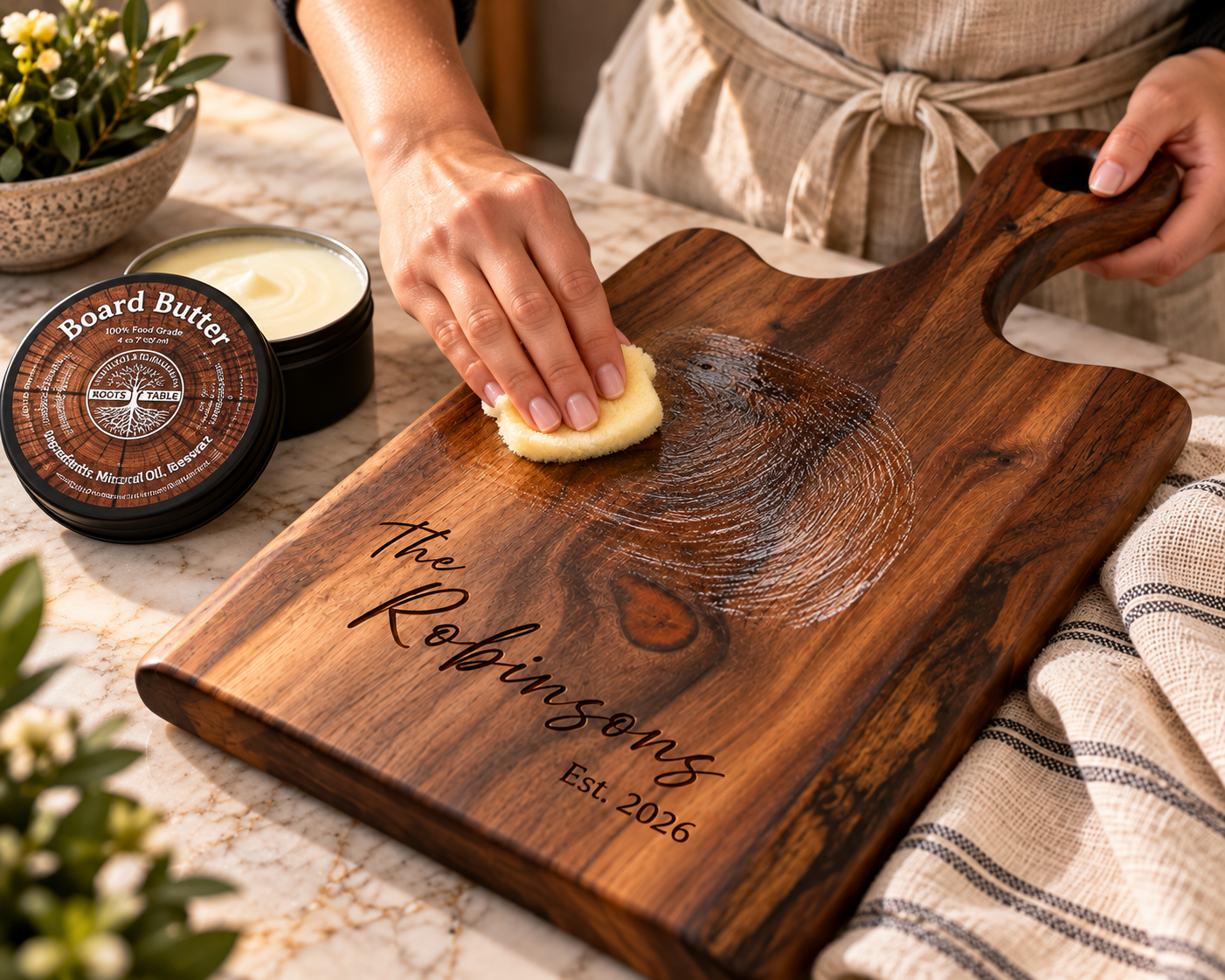
For the board care basics, use food-safe mineral oil or dedicated board conditioner. Some cooks prefer tung oil or beeswax blends, which add a bit more water resistance and polish. The routine is the same regardless: apply the finish every few weeks, buffing well, and your board will age beautifully.
Both woods are genuinely long-lived. A well-maintained maple or walnut board can easily last 20, 30, or even 50+ years. Many families pass boards down through generations.
Maple simply needs less intervention to achieve that lifespan. Its hardness naturally resists wear. Walnut, being softer and more porous, requires more consistent care to avoid surface degradation.
In practice, maple is lower-maintenance but visually more prone to showing wear. Walnut is higher-maintenance but aesthetically hides aging better because its dark color masks scratches.
Maple boards typically cost less than walnut. Hard maple is widely available and easier to source, which keeps prices down. A quality personalized maple cutting board usually runs $100 to $150.
Walnut commands a premium due to scarcity and desirability. The dark color and grain figure are harder to source consistently. Personalized walnut boards often cost $150 more.
If budget is a primary concern, maple wins. If you're willing to invest in a heirloom-quality piece that's also a design statement, walnut is worth the extra cost.
Choose maple if:
Choose walnut if:
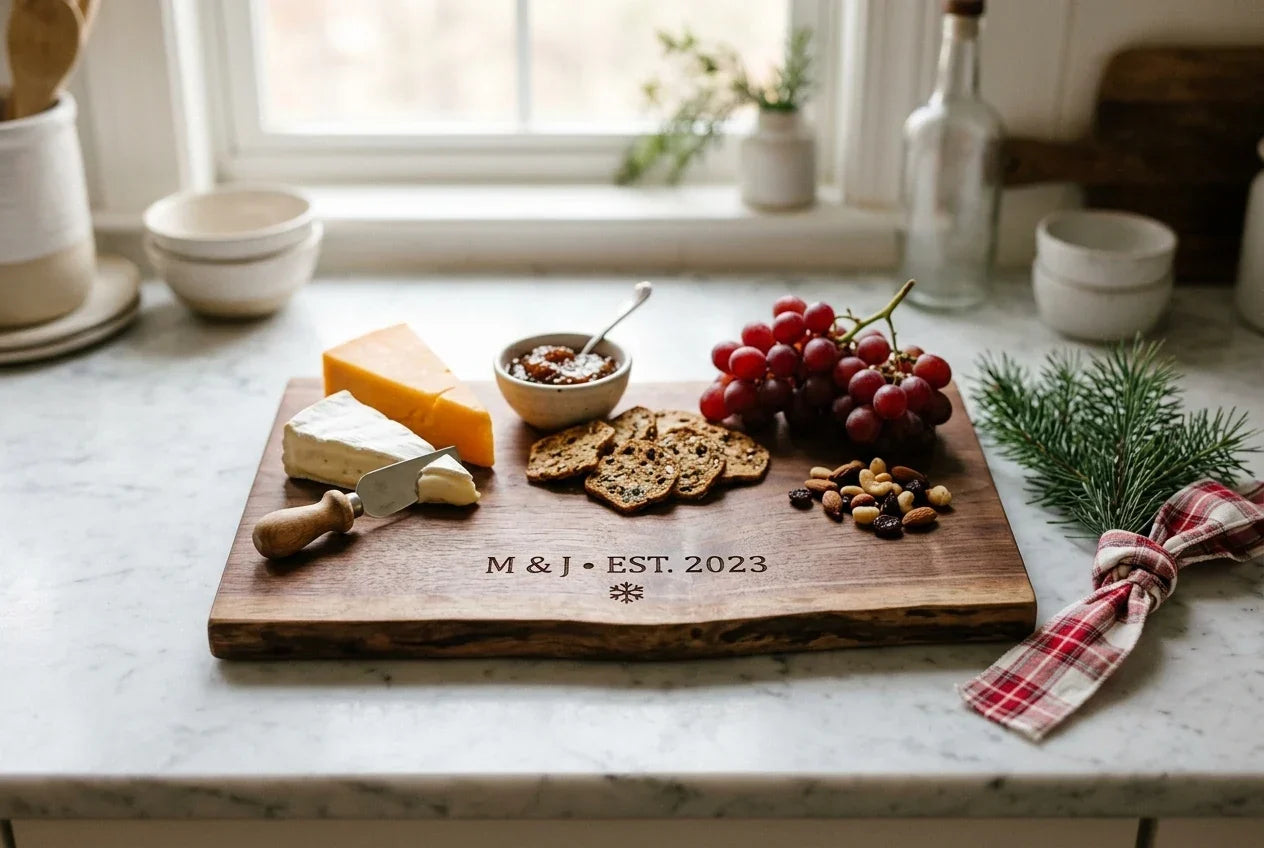
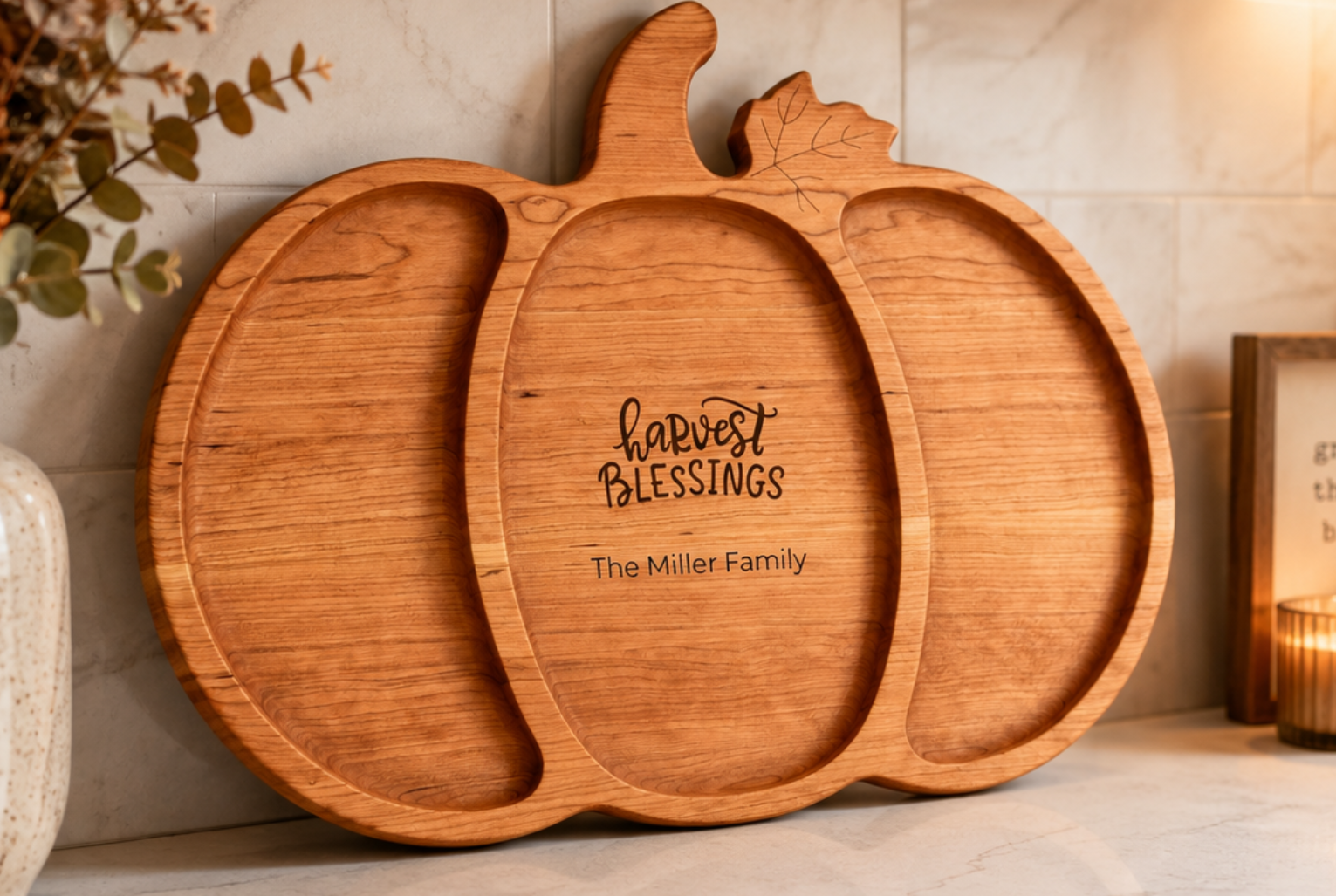
The real magic happens when your cutting board becomes personal. Both maple and walnut are ideal candidates for engraving, whether it's a family name, a favorite recipe, a date that matters, or a message that captures a memory.
An engraved personalized cutting board in either wood transforms a kitchen tool into a keepsake. Imagine passing a walnut board engraved with your initials to your child, or gifting a maple board to a newlywed couple with their wedding date etched into the edge. These details transform a board from functional to meaningful.
At Roots to Table, we craft both maple and walnut boards in end-grain and edge-grain styles, personalized to order. The wood you choose becomes part of your story.
There's no universally "better" answer. Maple is the safer, lower-maintenance choice for food prep and daily use. Walnut is the more beautiful, knife-friendly, higher-commitment option for cooks who view their tools as part of the kitchen experience.
Both woods are premium, durable, and capable of lasting a lifetime. Your choice depends on how you cook, what your kitchen looks like, and what matters most to you in a cutting board.
Whichever you choose, commit to proper care. Wash immediately after use, dry thoroughly, oil regularly, and store upright. A well-loved cutting board, whether maple or walnut, becomes a workhorse and a treasure.