
There is an idea in probability theory, philosophy, and systems thinking called the Lindy Effect. The premise is simple: the longer something has already survived, the longer it is likely to keep surviving. A book that has been in print for 200 years will probably still be read in another 200. A business that has operated for 50 years is a better bet than one that opened last month. Technology that has existed for a century has already proven it can weather change.
The Lindy Effect does not apply to living things, which age and decline. It applies to ideas, practices, institutions, and objects. The older they are, the more robust they tend to be. Each passing year is not a countdown. It is evidence of staying power.
Apply that logic to the dinner table, and something clicks into place.
People have been eating together since before recorded history. Communal fire pits, shared hunting, grain stores divided by household. The architecture of human civilization is partly built on the practice of sitting down together to eat. Every culture that has ever existed has developed rituals around shared meals. Sabbath dinners, harvest feasts, birthday cakes, Sunday roasts, holiday spreads, weeknight suppers with everyone crowded around a too-small table.
These family dinner traditions are not new. They are not a trend from the 1950s, a parenting fad, or something that influencers discovered and named. They are thousands of years old, and they have survived, in one form or another, through every era of upheaval, technological change, and cultural shift that humanity has ever faced.
By the Lindy Effect alone, that is a signal worth paying attention to.

The survival of family dinner traditions is not sentimental luck. There are real, documentable reasons they persist:
None of this requires perfection. It does not require a long table, fine dishes, or a complicated menu. The oldest traditions rarely do. The only real requirement is showing up.
If family dinner traditions are so robust, why does it feel like we have to fight to protect them?
The honest answer is that the forces competing for that time, the screens, schedules, convenience food, and the relentless pace of modern life, are newer and louder than they have ever been. The Lindy Effect says the older thing is more durable, but that does not mean the older thing wins automatically. It means it is worth deliberately defending.
A few things that actually help, based on what families report across generations:
There is also real value in connecting your own table to something older than yourself. Cooking your grandmother's recipe. Using the board your parents gave you. Setting out a dish that has been in the family so long nobody is entirely sure of its origin. These small gestures root a modern dinner to something ancient and tested, and they do so without requiring any explanation. Everyone at the table feels it.
For more ideas on how to build easy, beautiful spreads for family gatherings, the Easy Fall Charcuterie Board guide is a practical starting point, and the same principles apply year-round.
There is a category of object that the Lindy Effect also applies to: the things that sit at the center of shared meals and outlast any individual gathering. Cast iron pans handed down through three generations. A bread board that has been oiled so many times it has a patina no factory could replicate. A serving board that has traveled from apartment to first home to family house to grown children's kitchens.
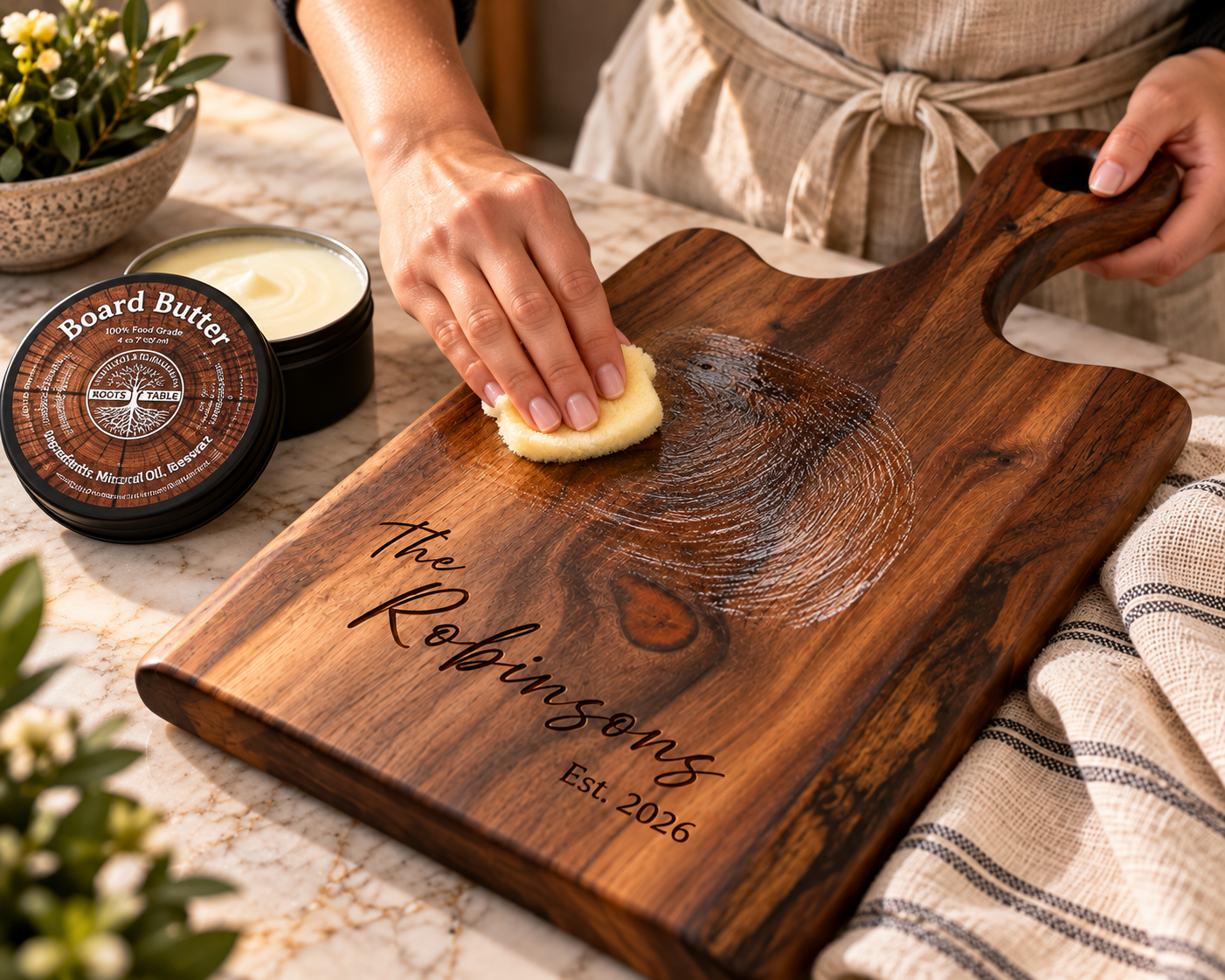
These objects persist because they were built to. They are made from materials that improve with age rather than degrading. They hold up under real use. And they accumulate meaning in a way that disposable, mass-produced items simply cannot, because meaning is accreted over time, not manufactured.
A handcrafted wood board is, in the most literal sense, a Lindy object. The tree that became the board grew for decades. The craft of working solid walnut or maple has been practiced for centuries. The practice of placing food on a beautiful wooden surface and gathering around it is as old as the hearth itself. When you bring that kind of object to the table, you are not just choosing a serving piece. You are choosing something that was made to last long enough to be passed down.

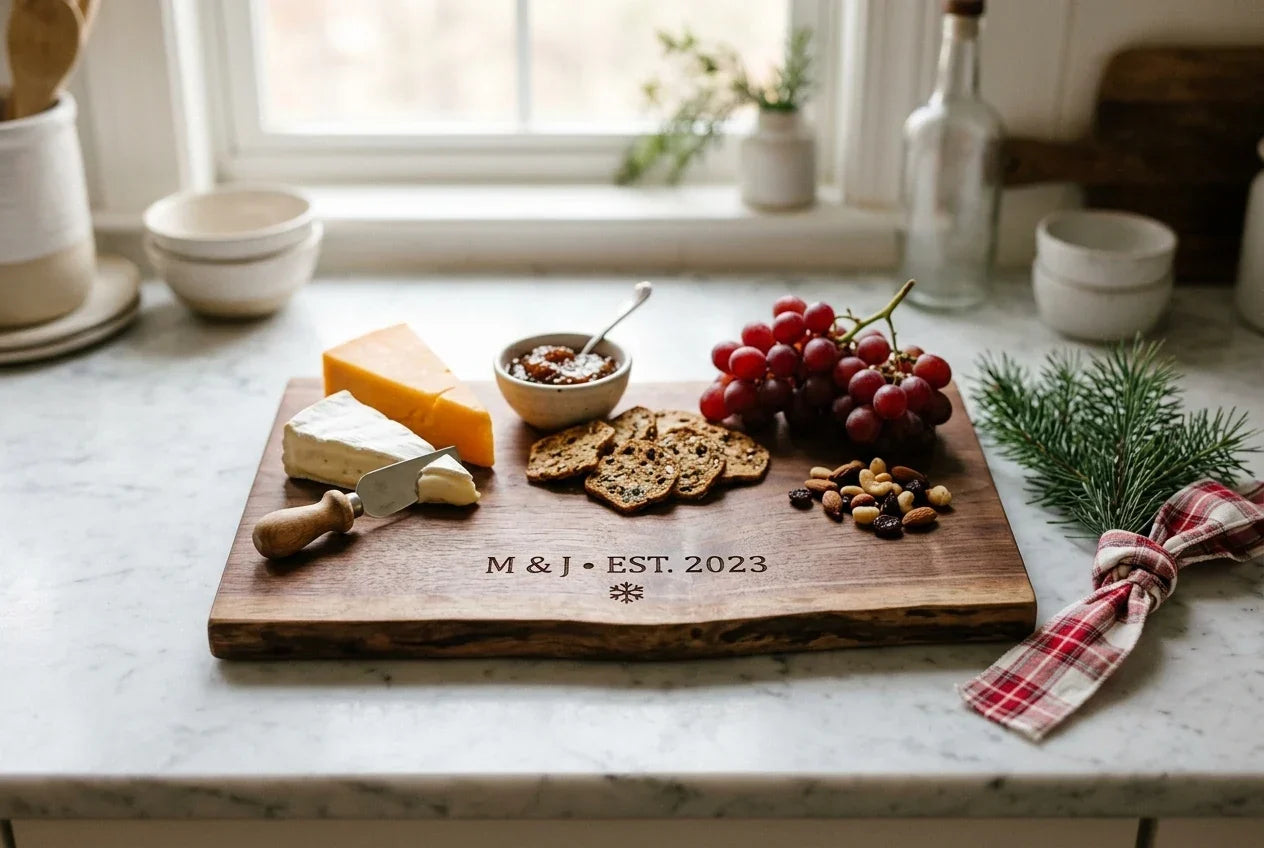
This is not an abstract idea. A Personalized Live Edge Black Walnut Charcuterie Board from Roots To Table is handcrafted from solid black walnut, a hardwood that only gets more beautiful with use and proper care. The live edge is the board's natural boundary, shaped by the tree rather than a straight saw, which means every piece is singular. Engrave a family name, a date, a phrase, or a recipe onto it, and you have an object that is specific to your family's story. That specificity is part of what makes things last.
For families where recipes are the real inheritance, a Personalized Handwritten Recipe Cutting Board takes that idea a step further. You send in an actual handwritten recipe, in the original handwriting of whoever wrote it, and it is engraved onto the board. The recipe that your grandmother made by memory and your mother wrote down on a scrap of paper becomes something that will still be in your family when your grandchildren are old. That is the Lindy Effect at work in a single object.
For a deeper look at why certain gifts endure across generations while others get quietly donated, Thoughtful Gifts People Actually Use and Treasure explores the same territory from a practical gifting angle.
One of the quieter truths about family dinner traditions is that the food is almost never the point. The food is the occasion. What actually gets passed down is harder to name: a way of arguing about politics while passing the bread, the specific noise a family makes when everyone is laughing at once, the unspoken understanding that this table is where you are always welcome back.
Some families anchor that transmission to game nights as well as dinners. The reason families pass down cribbage boards follows the same logic as why they pass down recipes: the object holds the memory of time spent together at a table, and that makes it worth keeping.
If the family tradition you want to protect includes a specific recipe, there is a practical question worth sitting with: where is that recipe right now? On a piece of paper in a drawer? In someone's head? The act of preserving it is its own tradition. How to preserve handwritten recipes is a short, useful guide to making sure the recipes that matter to your family survive long enough to be passed down.
The Lindy Effect is a useful lens for cutting through novelty. When something has been around for thousands of years, you do not need to wonder whether it works. The evidence is already in. Shared meals work. Family dinner traditions build the kind of closeness and continuity that nothing newer has managed to replicate or replace.
Honoring that does not require a grand gesture. It requires showing up at the table, week after week, with food and people and whatever small rituals your family has built over time. The older those rituals get, the longer they are likely to last.
That is what the Lindy Effect predicts. And in this case, it is a prediction worth leaning into.