
Here's What the Science Says
For years, home cooks were told never to use a wooden cutting board for raw meat. The logic seemed sound... wood absorbs moisture, and moisture can harbor bacteria, right?
Turns out… that advice was dead WRONG.
Newer research has flipped this kitchen myth on its head. Not only are wood cutting boards safe for raw meat, they are safer than plastic.
Let's break it down.
Back in the 1990s, researchers at the University of Wisconsin–Madison, led by Dr. Dean Cliver and Dr. Nese Ak, set out to test how well different cutting boards handled bacteria like Salmonella and E. coli.
The results were shocking.
On wood cutting boards, over 99.9% of bacteria died within minutes—even without soap or sanitizer.
On plastic boards, bacteria not only survived, but hid in knife grooves...even after washing.
This wasn't a fluke. They repeated the tests under different conditions, using new boards and old, clean surfaces and dirty ones.
The outcome stayed the same: wood killed bacteria fast. Plastic gave them a place to thrive.
| Factor | Wood | Plastic |
|---|---|---|
| Bacterial survival | Dies within minutes | Survives and multiplies |
| Knife grooves trap bacteria | No (sealed surface) | Yes (deep grooves) |
| Cleanability | Naturally self-sanitizing | Difficult after scratching |
| Safe for raw meat | Yes | Yes (with caution) |
| Durability | Improves with care | Degrades as grooves deepen |
Is it safe to cut raw chicken on a wooden board?
Yes. Research shows wood kills bacteria from raw poultry faster than plastic. Wash with soap and warm water right after use, then dry it. Wood's natural antimicrobial properties handle bacteria better than plastic.
What does the USDA say about wood cutting boards?
The USDA recognizes wood as a food-safe cutting surface. Federal food code permits both wood and plastic for cutting raw meat, as long as the surface is smooth, cleanable, and non-toxic. The science supporting wood's safety is strong.
How do you sanitize a wood cutting board after raw meat?
Wash by hand with hot soapy water right after use. Dry it promptly with a clean towel or stand it upright to air dry. Avoid the dishwasher, which can damage the wood over time. Regular care is what matters most.
Does wood hold bacteria in its grooves?
No. Unlike plastic, wood fibers are too small for bacteria to hide in. Bacteria are drawn down into the wood by capillary action and die. Plastic develops deep grooves from knife cuts where bacteria settle and survive.
A 2019 review published in the Italian Journal of Food Safety (PubMed ID: 31113021) reinforced the same conclusion. Researchers found that wood naturally inhibits bacterial growth and continues to perform well in food-contact environments.
In contrast, plastic boards... especially once they're scratched from use... allow bacteria to hide deep in the grooves, making thorough cleaning harder and cross-contamination more likely.
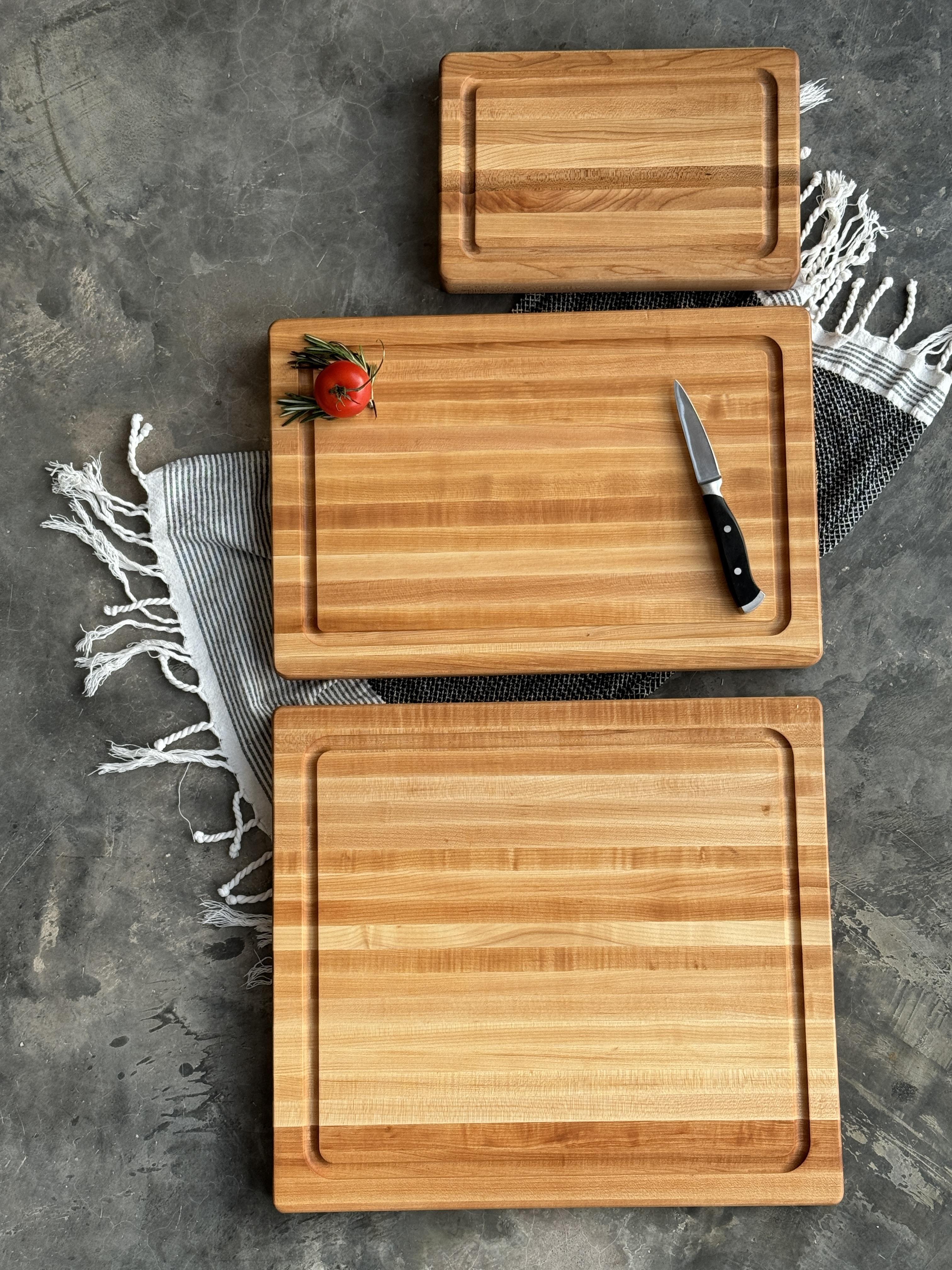
It's not just magic—it's the way wood works:
Capillary action draws moisture (and bacteria) deep into the fibers of the board
Once inside, bacteria can't multiply and quickly die
Wood's natural compounds (especially in hardwoods like maple) have antimicrobial effects
This makes wood a naturally self-sanitizing material. Plastic simply doesn't do that.
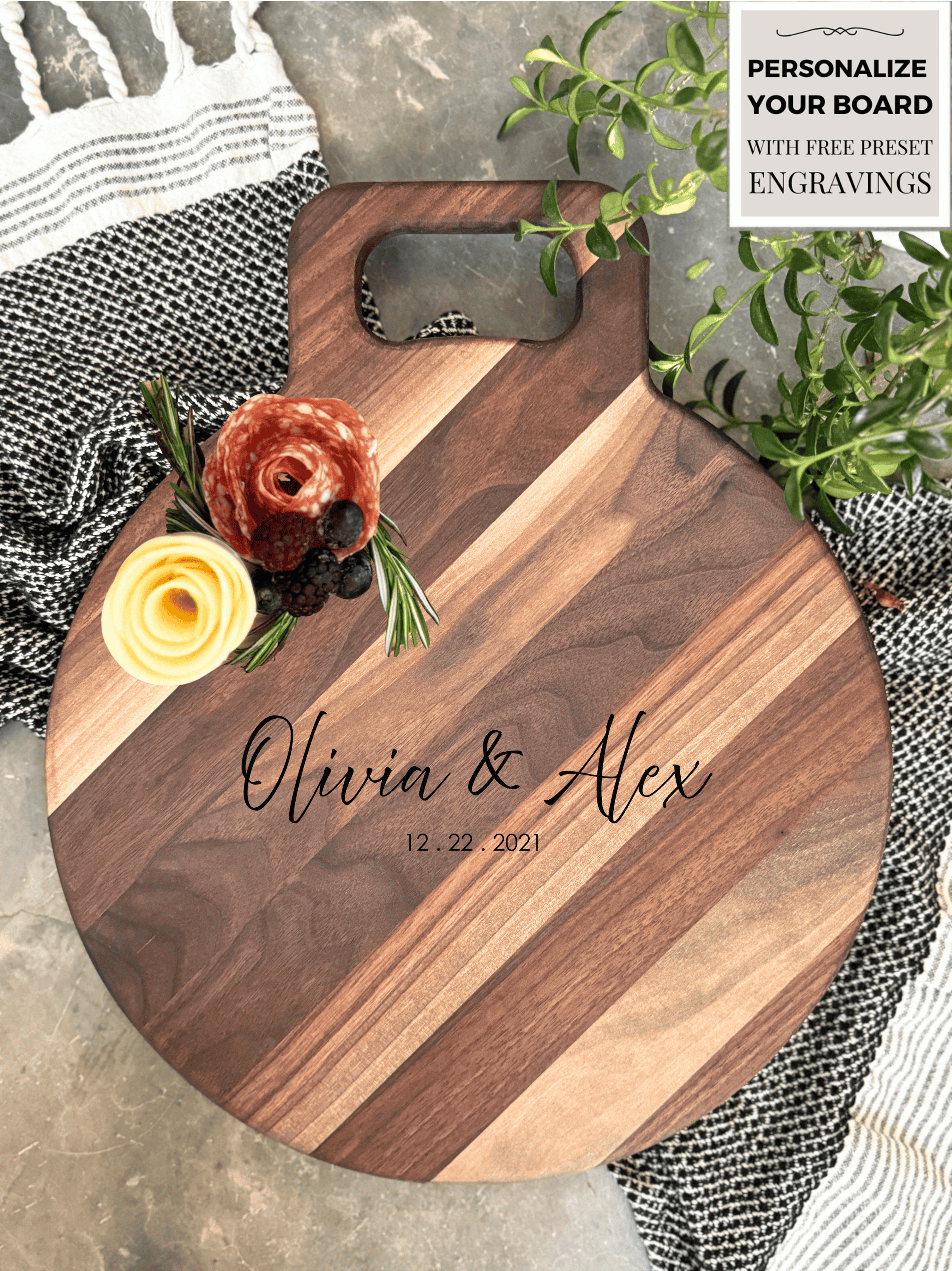
Yes. Absolutely!
As long as you follow basic food safety practices:
Wash your board with hot, soapy water after use
Don't cross-contaminate (use separate boards for raw meat and ready-to-eat foods)
Let the board dry completely between uses
You don't need to soak it. You don't need bleach. Wood does its part, and with proper care, it can be even safer than plastic.